

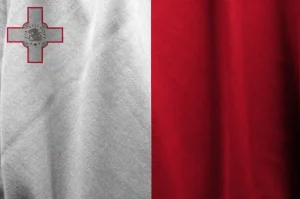






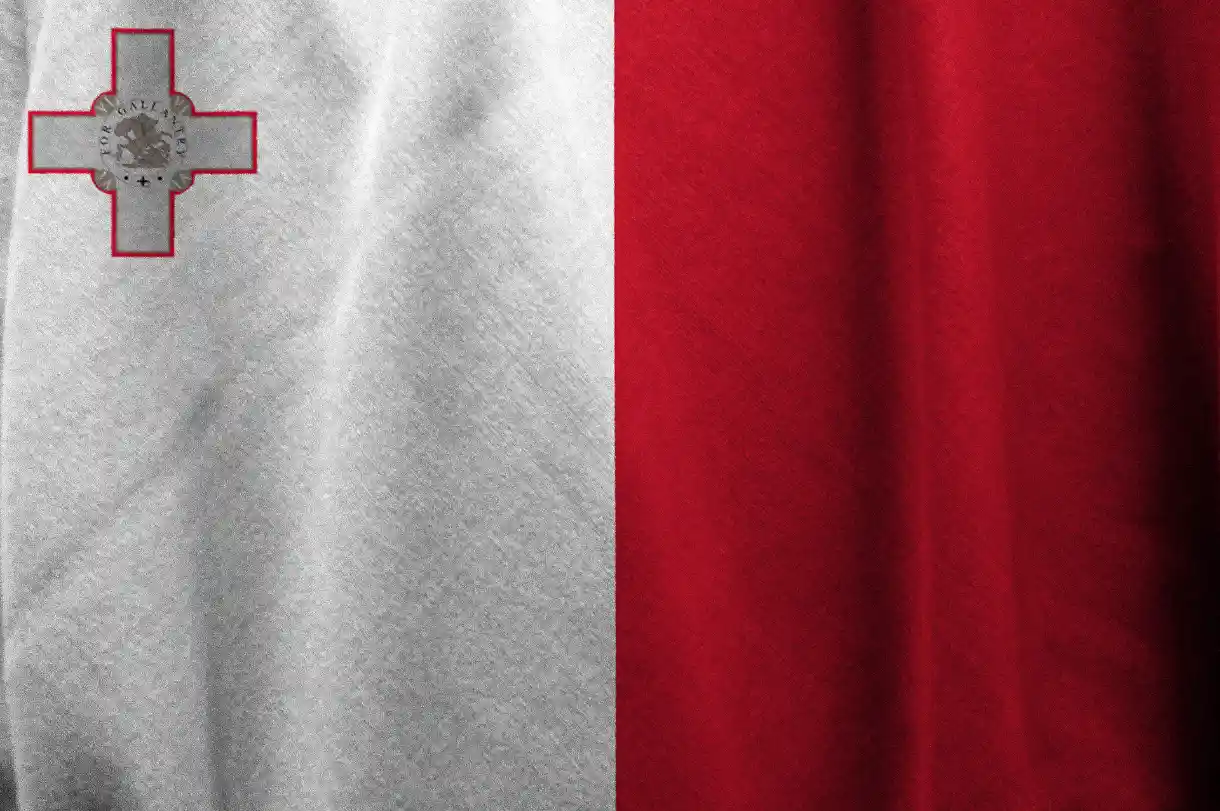
Full realistic view of the Maltese flag. Source: TechGaged / PixaBay.
A New EU License Puts OKX in a Different Regulatory League
In Brief
- • OKX secured a Malta Payments Institution license, aligning with MiCA and PSD2.
- • The license enables compliant stablecoin and payment services across the EU.
- • Europe’s crypto regulations are accelerating the adoption of institutional payment infrastructure.
Ad
OKX has secured a Payments Institution license in Malta, positioning the exchange to operate under the European Union’s MiCA and PSD2 regulatory frameworks.
The company confirmed the approval through its official channels. Stating the license enables it to expand compliant stablecoin and digital asset payment services across the EU.
Importantly, the milestone strengthens OKX’s regulatory footprint at a time when European crypto oversight is entering its full implementation phase.
OKX’s and Regulatory Positioning in the EU
According to OKX, the Payments Institution license was granted in Malta, a jurisdiction that has actively positioned itself as a regulatory hub for digital assets.
The approval allows OKX to operate in alignment with the EU’s Markets in Crypto-Assets Regulation (MiCA) and the revised Payment Services Directive (PSD2).
In context, MiCA establishes a unified regulatory framework for crypto asset service providers across EU member states.
Therefore, by securing a Payments Institution license under these frameworks, OKX moves beyond exchange operations into regulated payment infrastructure.
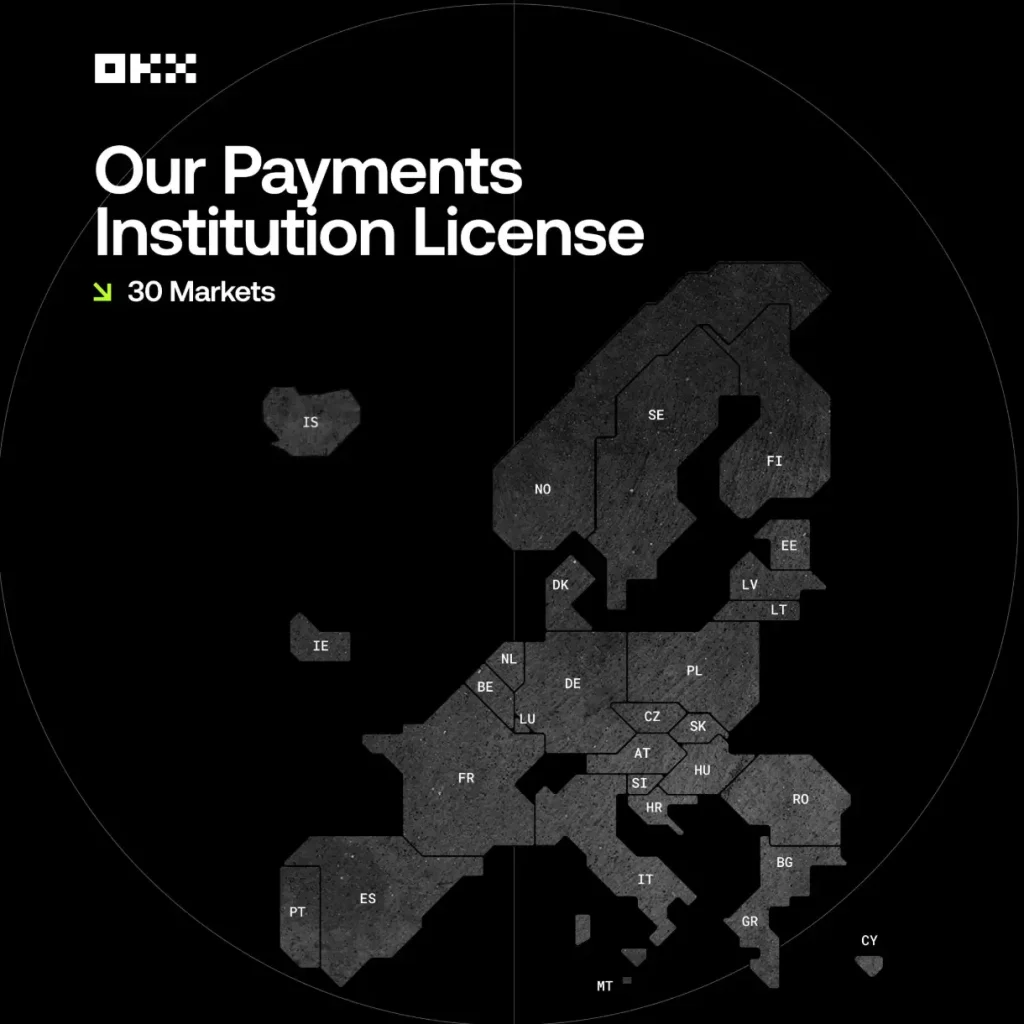
This regulatory pathway provides passporting rights across member states. Indeed, services approved in Malta can extend to other EU jurisdictions without separate licensing in each country.
The move aligns with a broader trend of major crypto platforms formalizing their European operations ahead of MiCA’s full enforcement.
The Next Phase of Institutional Crypto Payments in Europe
OKX’s CEO described the license as foundational to the next phase of compliant stablecoin payments in the EU.
Under MiCA, stablecoin issuers and service providers must meet strict reserve, transparency, and governance standards.
Moreover, for exchanges integrating payment capabilities, regulatory clarity reduces counterparty uncertainty and improves institutional confidence.
OKX’s entry into regulated payment services reflects a structural shift in the exchange model. Indeed, as the EU advances regulatory integration, exchanges may gain competitive advantages in partnerships, fiat on-ramps, and institutional settlement flows.
The Malta approval reinforces Europe’s emergence as one of the most structured regulatory environments for digital assets globally.
More Must-Reads:
How do you rate this article?
Subscribe to our YouTube channel for crypto market insights and educational videos.




Join our Socials
Briefly, clearly and without noise – get the most important crypto news and market insights first.
Most Read Today
1
Institutions Are Losing Patience, and Bitcoin Developers Just Got a Warning
2$2.3 Billion Vanished in Bitcoin Losses. History Says This Moment Matters
3Gravestone Doji: XRP Just Flashed a Brutal Historical Signal
4Something Big Is Coming to Your X Feed, and It Involves Bitcoin
5BTC Stress Signal Flashing Again; Here’s What It Says
Latest




8
Also read
Similar stories you might like.

Industry
Crypto.com Becomes First Crypto Platform to Achieve This Certification
Patrick | 2026-02-16
Industry
The CFTC Brings Top Crypto CEOs Into Policy Circle
Patrick | 2026-02-14
Crypto News
Crypto Firms Are Offering Banks a Deal to Save a Key US Bill
Patrick | 2026-02-05
Crypto News
This Crypto Giant Just Cracked Europe’s Banking System
Rokas | 2026-02-10

Crypto News
UAE Central Bank Approves First USD-Backed Stablecoin, USDU
Patrick | 2026-02-06

Crypto News
Laser Digital Pursues OCC Charter Amid Crypto Oversight
Rokas | 2026-02-10

Crypto News
OKX Launches Mastercard Stablecoin Card in Europe
Patrick | 2026-01-29
Crypto News
Arizona Takes Step Toward Crypto-Friendly Tax Policy
Patrick | 2026-01-28
Crypto News
No China Trade Deal, No Crypto Detour: Why Canada Is Siding With North America’s Digital Finance Bloc
Rokas | 2026-01-26

Crypto Guides
The New Era of Crypto Regulation: Where Policy Is Actually Heading
Rokas | 2026-01-24