













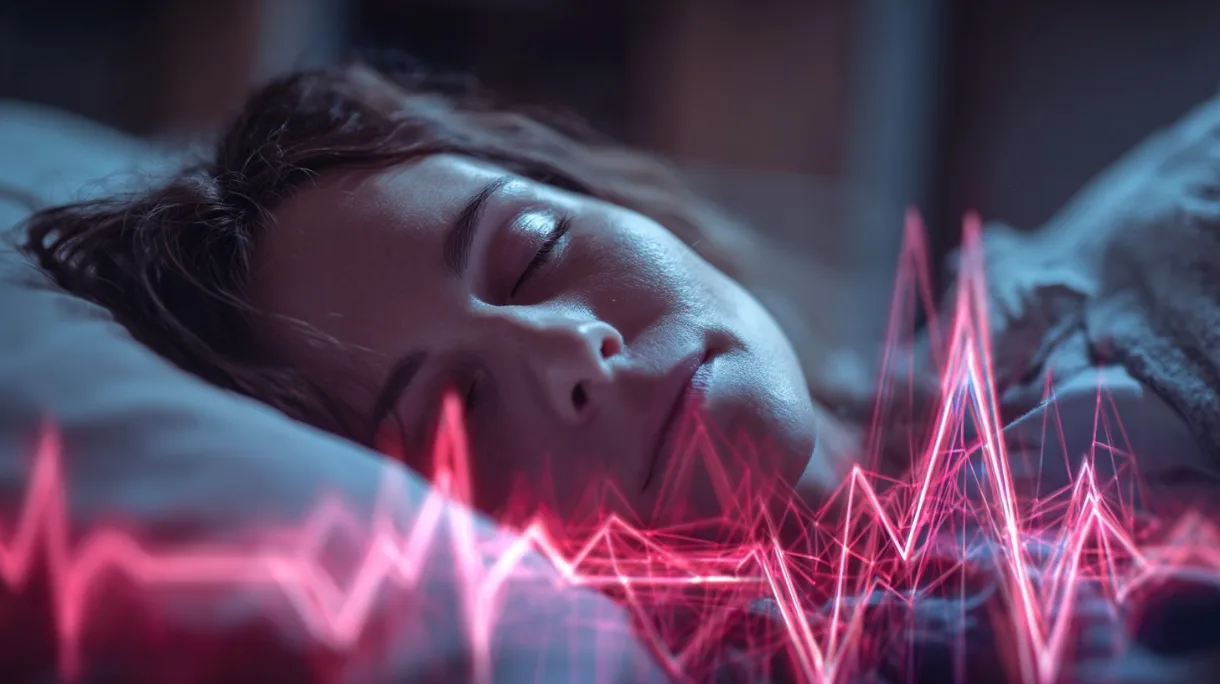
AI Can Now Detect Sleep Apnea Just From a Heart Test
AI Can Now Detect Sleep Apnea Just From a Heart Test
In Brief
- • Key Takeaways:
Researchers at Mayo Clinic have developed an artificial intelligence (AI) algorithm capable of detecting obstructive sleep apnea (OSA) using results from a standard electrocardiogram (ECG), which could revolutionize early detection, particularly in women.
Ad
- Mayo Clinic’s AI can detect sleep apnea from a 12-lead ECG test.
- The model was trained on 11,299 patient ECGs and sleep evaluations.
- Women showed stronger ECG signatures of OSA than men.
Sleep apnea, a common but often overlooked condition, affects more than 936 million adults worldwide, leading to repeated pauses in breathing during sleep and serious cardiovascular risks. However, the condition frequently goes undiagnosed, particularly in women, due to different symptoms than in men.
Mayo Clinic’s new AI algorithm addresses this diagnostic gap. By analyzing standard ECG test results, a widely available and inexpensive tool, the system can detect patterns in the heart’s electrical activity that correlate with obstructive sleep apnea, per a report from November 6.
According to Virend Somers, M.D., Ph.D., Alice Sheets Marriott Professor of Cardiovascular Medicine and senior author of the study:
Ad
“OSA affects the heart to the point where AI algorithms can detect the OSA signature from the ECG, which in essence is a representation of the electrical activity of the heart muscle cells.”
Why Women Stand Out in the Data
As it happens, the research team analyzed ECGs from more than 11,000 patients, over 7,000 of whom had a confirmed diagnosis of OSA. Surprisingly, the algorithm was especially effective at detecting the condition in female patients, even though their apnea cases were milder on average. Per Dr. Somers:
“The most surprising finding was the increased visibility on the ECG of OSA in the females compared to the males, even though the OSA severity was less in the females. […] This is relevant since emerging data consistently suggest that females have a greater relative likelihood of suffering the cardiovascular consequences of OSA, even if their OSA may be considered ‘milder’ by standard diagnostic criteria.”
Meanwhile, the study also suggests that women may experience greater damage to heart muscle cells from OSA, a factor that could further explain the heightened cardiovascular impact seen in female patients.
All things considered, this AI tool could not just help clinicians to diagnose OSA, but also to monitor how treatments for it affect cardiovascular health, offering a non-invasive way to track improvements or residual risks over time. With further validation, it could pave the way for routine OSA screening during heart checkups.
More Must-Reads:
How do you rate this article?
Subscribe to our YouTube channel for crypto market insights and educational videos.






Join our Socials
Briefly, clearly and without noise – get the most important crypto news and market insights first.
Most Read Today
1
Samsung crushes Apple with over 700 million more smartphones shipped in a decade
2Peter Schiff Warns of a U.S. Dollar Collapse Far Worse Than 2008
3Dubai Insurance Launches Crypto Wallet for Premium Payments & Claims
4XRP Whales Buy The Dip While Price Goes Nowhere
5Luxury Meets Hash Power: This $40K Watch Actually Mines Bitcoin
Latest






8
Also read
Similar stories you might like.

Artificial Intelligence
Robert Kiyosaki Warns AI Bubble May Be Bigger Than Dot-Com
Ana | 2025-12-24

Artificial Intelligence
New Epstein Disclosures Collide With an AI Project Built Months Earlier
Ana | 2025-12-22
Artificial Intelligence
Gemini Can Now Detect AI-Generated Files
Shedrach | 2025-12-19

Artificial Intelligence
Fetch.ai Launches Autonomous AI-to-AI USDC Settlement
Shedrach | 2025-12-19

Artificial Intelligence
Tesla Semi Tease Hints At Big Changes Under The Hood
Ana | 2025-12-19
Artificial Intelligence
Scientists Use AI to Crack Nature’s Hidden Laws
Ana | 2025-12-18
Artificial Intelligence
Can AI Ever Be Proven Conscious? A Philosopher Says No
Ana | 2025-12-18
Artificial Intelligence
Researchers Uncover Hidden Bias in Cancer Diagnosis AI
Ana | 2025-12-17

Artificial Intelligence
AI Learns Math Better by Arguing With Itself
Ana | 2025-12-15
Artificial Intelligence
Breakthrough AI Enables Seamless Control of Prosthetic Hands
Shedrach | 2025-12-12