













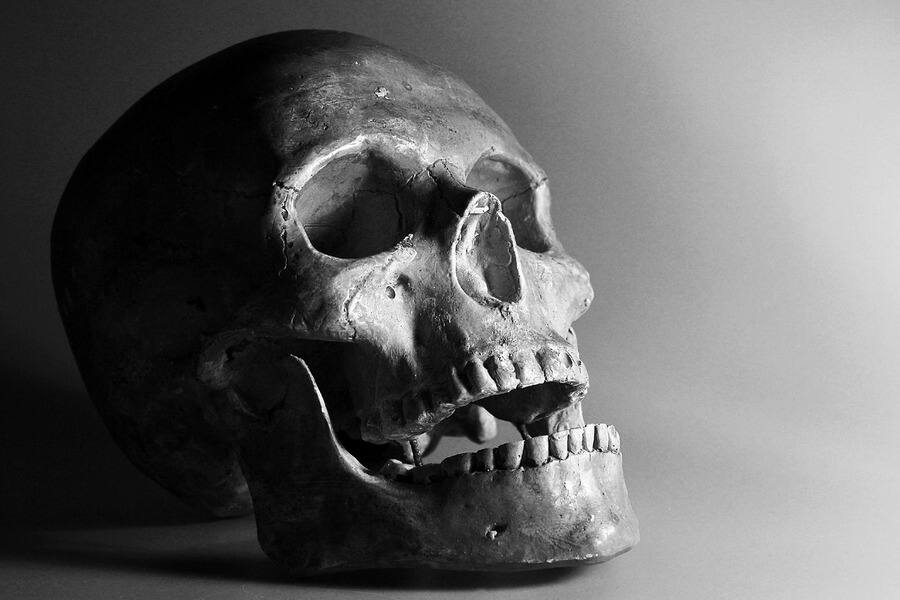
A human skull in black and white
Scientists have had cause to rethink the timeline of human evolution after discovering a skull in China that could not be classified.
Ad
A report on their analysis of the skull published on 25 September says that the skull belongs to an early Denisovan ancestor that must have originated much earlier than thought.
Several other similar skulls have been discovered in China, which the scientists say should be classified as Homo longi and the Denisovans.
A mind bugling discovery
The skull was first discovered decades ago from a riverbank in central China, but scientists could not classify it at the time.
Ad
With advances in technology, they have managed to digitally reconstruct the badly damaged skull which is thought to be 1 million years old.
According to the report, the features of the skull suggest that the fossil belonged to the same lineage as a striking specimen called “Dragon Man” and the Denisovans, which are believed to be prehistoric humans with unclear origins.
Based on the reconstruction and 100 other skulls, the report says the findings significantly shifts the timeline for humans, Homo sapiens, and Homo neanderthalensis, pushing it back by 400,000 years.
Coauthor Chris Stringer, a paleoanthropologist and research leader in human evolution at London’s Natural History Museum said.
“This changes a lot of thinking because it suggests that by one million years ago, our ancestors had already split into distinct groups, pointing to a much earlier and more complex human evolutionary split than previously believed.”
Decades of work
The research on the skulls has been on for several decades. According to the report, the skull is one of two partially mineralized specimens first discovered 1989 and 1990 in Yunxian in Shiyan, an area in Hubei province in central China.
The study’s first author, Xiaobo Feng, a professor at Shanxi University in China said the team decided to revisit the skull because of its rarity and relevance to human history.
“We decided to study this fossil again because it has reliable geological dating and is one of the few million-year-old human fossils. A fossil of this age is critical for rebuilding our family tree.”
The scientists have concluded based on the analysis that Homo sapiens, Denisovans and Neanderthals originated much earlier than previously thought, opening the door to new research in human evolution.
How do you rate this article?
Subscribe to our YouTube channel for crypto market insights and educational videos.






Join our Socials
Briefly, clearly and without noise – get the most important crypto news and market insights first.

Most Read Today
1
Samsung crushes Apple with over 700 million more smartphones shipped in a decade
2Peter Schiff Warns of a U.S. Dollar Collapse Far Worse Than 2008
3Dubai Insurance Launches Crypto Wallet for Premium Payments & Claims
4XRP Whales Buy The Dip While Price Goes Nowhere
5Luxury Meets Hash Power: This $40K Watch Actually Mines Bitcoin
Latest




Most Read Today

MOST ENGAGING
8
Also read
Similar stories you might like.

Automotive
China Greenlights First Commercial Driverless Vehicle Operation
Shedrach | 2025-12-17
Research
China Moves Closer to Moon Construction After Retrieving Intact “Lunar Soil Bricks”
Shedrach | 2025-11-20

Science
First Chinese 3D-printed Turbojet Engine Completes Maiden Flight Test
Shedrach | 2025-11-15

Business &Amp; Technology
How China became the ‘world’s factory’: The hidden history
Shedrach | 2025-10-13

Research
China unveils world’s largest centrifuge with 300 times Earth’s gravity
Shedrach | 2025-09-29
Military
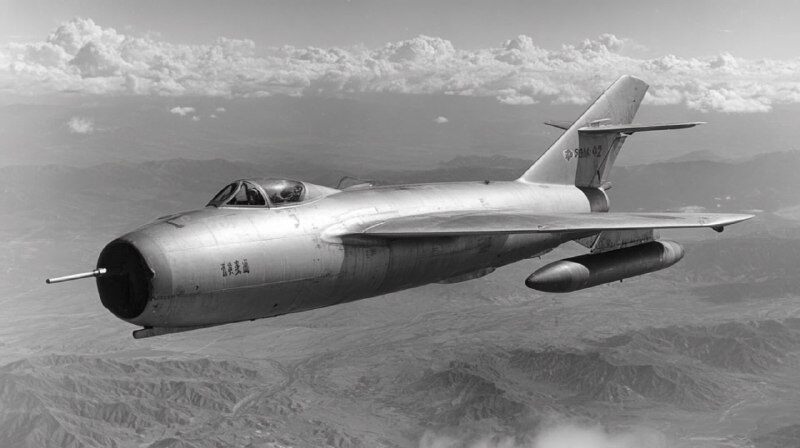
China turns 75‑Year‑Old Soviet jets into modern drone bombers
Shedrach | 2025-09-25

Research
China 3D prints moon buildings using lunar soil
Ana | 2025-07-02

Business &Amp; Technology
Gold for cash? China’s ATMs melt jewelry on-site
Ana | 2025-06-04

Cybersecurity
Czech government blames China for attempted hack of Foreign Affairs Ministry
Shedrach | 2025-05-28

Automotive
Audi launches ringless AUDI brand with E5 Sportback
Ana | 2025-04-23