













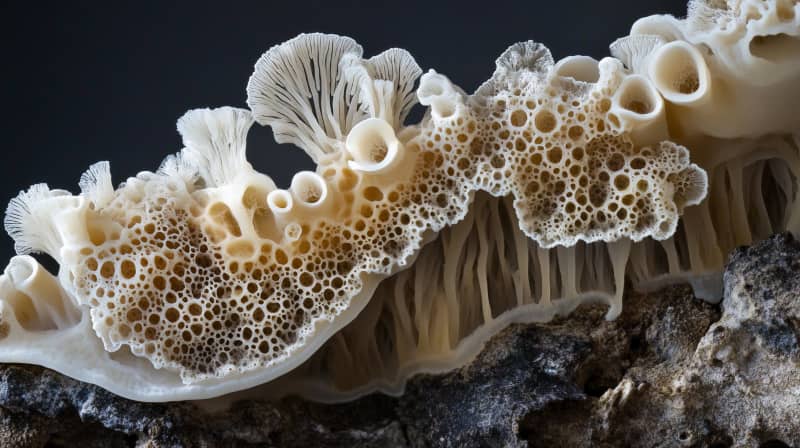
Mushroom-based buildings could help solve Kenya’s housing crisis
Kenya is facing an inadequate supply of new housing units, partially the consequence of the country’s population growth, and each year, only around 50,000 units spring up against a demand of about 250,000, but the solution may lie in mushroom-sourced construction materials.
Ad
Indeed, a Nairobi-based research and manufacturing company MycoTile is using upcycled agricultural waste to create building solutions, including mycelium, the vegetative element of fungus, according to a report by Nature published on March 10.
In the words of Mtamu Kililo, MycoTile’s CEO, his company “works to produce affordable building materials out of agricultural waste bonded with oyster-mushroom mycelium, a network of tiny filaments that forms a root-like structure for the mushroom.”
Why mushroom-based construction material?
There are many reasons why mycelium is an excellent choice for building materials and a superior alternative to traditional non-biodegradable packaging. They include its high insulation value, total compostability, long-term sustainability, low weight, and the presence of chitin.
Ad
The latter has noteworthy mechanical properties as a biopolymer, showing significant structural robustness and flexibility for various functionalities. In nature, chitin composes some of its toughest structures, such as insect cuticles, crustacean shells, and mollusk nacre, making it a natural fire retardant, and therefore safer than the alternatives.
Specifically, mycelium, being an interconnected network of microscopic cells, can trap air and water vapor and act as an excellent insulator, helping regulate the temperature inside the building, lowering the demand for heating and cooling, and making mycelium-based constructions more energy efficient.
For all of these reasons, already a few projects have deployed them, including in student accommodation, where they greatly reduced the sound traveling from one room to the next and helped regulate the temperature inside. Plus, the material is affordable and can be composted at the end of the building’s life.
That said, Kililo noted that:
“The construction industry is conservative and is slow to accept new materials. It’s also hard to convince the general public, who are used to concrete and brick, that we are building reliably with mushrooms.”
However, the use of mycelium in building has the potential to revolutionize the sector and more architects and builders might start adopting it.
Speaking of mushrooms, psilocybin, the psychedelic found in drugs like magic mushrooms, may help restore normal brain function in mild recurrent head trauma, which poses an increased risk of dementia and other medical problems.
How do you rate this article?
Subscribe to our YouTube channel for crypto market insights and educational videos.






Join our Socials
Briefly, clearly and without noise – get the most important crypto news and market insights first.
Most Read Today
1
Samsung crushes Apple with over 700 million more smartphones shipped in a decade
2Peter Schiff Warns of a U.S. Dollar Collapse Far Worse Than 2008
3Dubai Insurance Launches Crypto Wallet for Premium Payments & Claims
4XRP Whales Buy The Dip While Price Goes Nowhere
5Luxury Meets Hash Power: This $40K Watch Actually Mines Bitcoin
Latest






8
Also read
Similar stories you might like.

Business &Amp; Technology
Spider Robot Can 3D-Print a House in 24 Hours – The Future of Construction?
Ana | 2025-11-19
Industry
U.S. housing authority mulls use of crypto in qualifying mortgage applicants
Shedrach | 2025-06-24
Research
Surprising Parkinson’s aid: ‘Magic mushrooms’ may improve motor skills, mood
Ana | 2025-04-30

Automotive
Roboticists design aerial drones to tackle hazardous construction projects
Ana | 2025-04-25

Computer &Amp; It
Most expensive countries for internet revealed: UAE charges 12x more per Mbps than UK
Jastra | 2025-03-03