













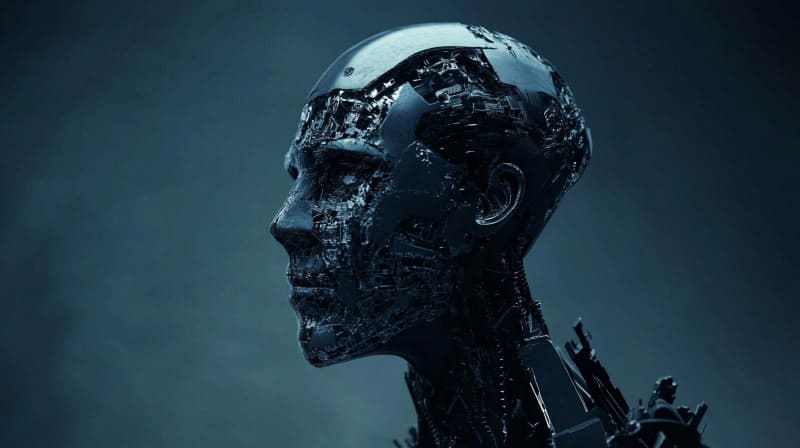
It’s alive! AI runs on real human cells for first time
In what could well be a major step toward truly ‘alive’ artificial intelligence (AI), scientists have created the world’s first ‘biological computer’ that fuses human brain cells with silicon hardware to form fluid neural networks and which will reach users in the coming months.
Ad
As it happens, Australian company Cortical Labs has just launched the CL1, also known as a Synthetic Biological Intelligence (SBI), in Barcelona, Spain, as a more dynamic, sustainable, and energy-efficient model than any AI currently in existence, according to a report published on March 3.

Per the report, the scientists expect their CL1 system to become a game-changer for science and medical research, thanks to the human-cell neural networks that form on the silicon ‘chip’ and present an ever-evolving, ever-learning organic computer.
Indeed, the CL1 model learns so quickly and flexibly that it entirely surpasses the silicon-based AI chips deployed in training existing large language models (LLMs) like ChatGPT and Gemini.
Ad
How the CL1 model works
As its developers explained, it involves cultivating real neurons “inside a nutrient-rich solution, supplying them with everything they need to be healthy.” Then, they “grow across a silicon chip, which sends and receives electrical impulses into the neural structure.”
Specifically, it all takes place in the lab’s proprietary Biological Intelligence Operating System (biOS), running a simulated world and sending straight to the neurons the information about their environment. In response, neurons produce impulses that affect their simulated world.
This way, the scientists bring the neurons to life and integrate them into the biOS using a combination of hard silicon and soft tissue, facilitating direct connection to the neurons, deploying code to the real neurons, “and solving today’s most difficult challenges.”
Overall, each CL1 unit functions independently and features a completely programmable bi-directional stimulation interface, life support and recording systems, and a Python API, which allows for dynamic applications. It is also energy-conserving, with one rack of 30 CL1s requiring only 850-1,000 watts.
In the words of Cortical founder and CEO Dr Hon Weng Chong, the recent CL1 launch is the product of a series of critical breakthroughs and “culmination of a vision that has powered Cortical Labs for almost six years,” adding that customers would be able to buy the CL1 model biocomputer outright or access the chips remotely via the cloud:
“We’re offering ‘Wetware-as-a-Service’ (WaaS). (…) This platform will enable the millions of researchers, innovators, and big-thinkers around the world to turn the CL1’s potential into tangible, real-world impact. We’ll provide the platform and support for them to invest in R&D and drive new breakthroughs and research.”
Elsewhere, advances in other areas of AI technology continue unabated, with the launch of OpenAI’s Sora and ChatGPT 4.5, xAI’s Grok 3, and Anthropic’s Claude 3.7 Sonnet, as well as the proliferation of Robotaxis across the world, and the use of AI on the frontlines and in medicine.
How do you rate this article?
Subscribe to our YouTube channel for crypto market insights and educational videos.






Join our Socials
Briefly, clearly and without noise – get the most important crypto news and market insights first.
Most Read Today
1
Samsung crushes Apple with over 700 million more smartphones shipped in a decade
2Peter Schiff Warns of a U.S. Dollar Collapse Far Worse Than 2008
3Dubai Insurance Launches Crypto Wallet for Premium Payments & Claims
4XRP Whales Buy The Dip While Price Goes Nowhere
5Cathie Wood: $28 Billion Bitcoin Deleveraging Drove Recent Pullback
Latest






8
Also read
Similar stories you might like.

Artificial Intelligence
Robert Kiyosaki Warns AI Bubble May Be Bigger Than Dot-Com
Ana | 2025-12-24

Artificial Intelligence
New Epstein Disclosures Collide With an AI Project Built Months Earlier
Ana | 2025-12-22

Artificial Intelligence
Gemini Can Now Detect AI-Generated Files
Shedrach | 2025-12-19

Artificial Intelligence
Fetch.ai Launches Autonomous AI-to-AI USDC Settlement
Shedrach | 2025-12-19

Artificial Intelligence
Tesla Semi Tease Hints At Big Changes Under The Hood
Ana | 2025-12-19
Artificial Intelligence
Scientists Use AI to Crack Nature’s Hidden Laws
Ana | 2025-12-18

Artificial Intelligence
Can AI Ever Be Proven Conscious? A Philosopher Says No
Ana | 2025-12-18
Artificial Intelligence
Researchers Uncover Hidden Bias in Cancer Diagnosis AI
Ana | 2025-12-17

Artificial Intelligence
AI Learns Math Better by Arguing With Itself
Ana | 2025-12-15
Artificial Intelligence
Breakthrough AI Enables Seamless Control of Prosthetic Hands
Shedrach | 2025-12-12