

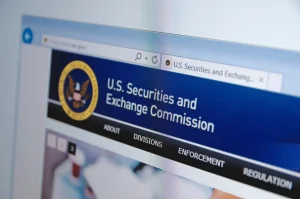




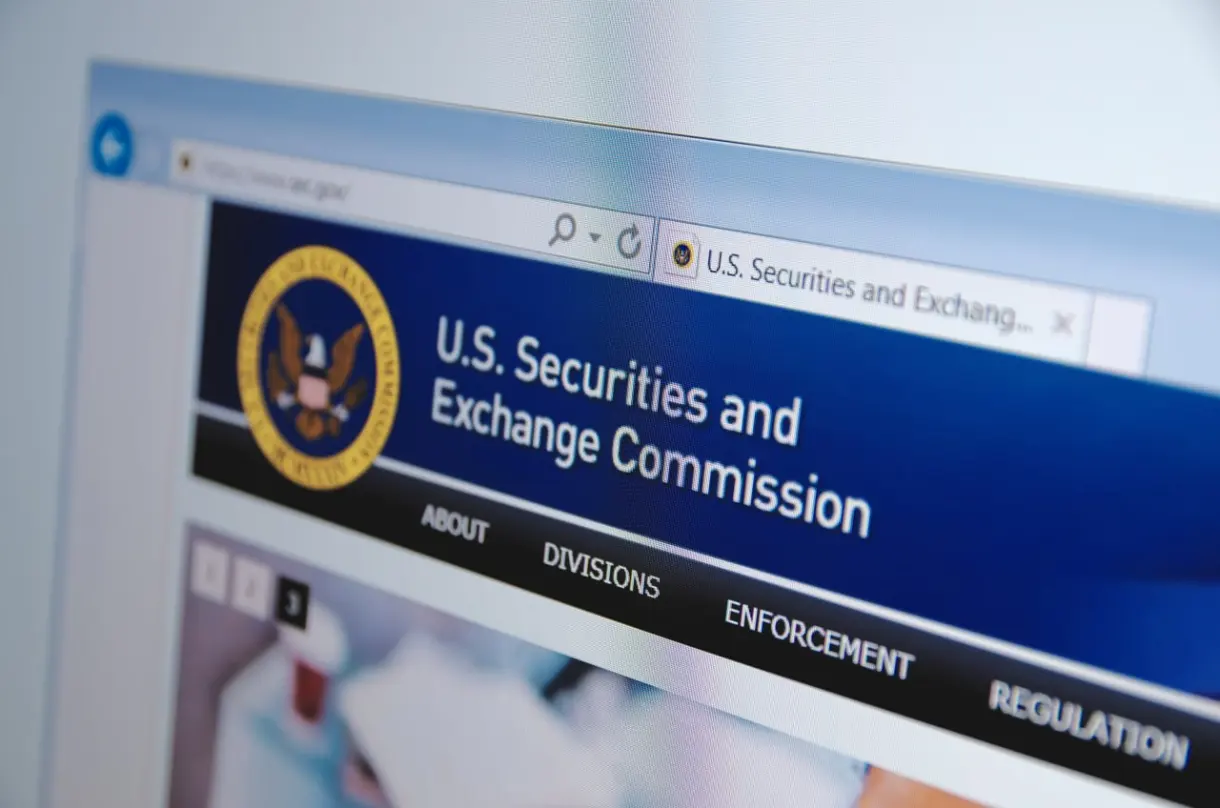
SEC website on computer screen. Source: TechGaged / Shutterstock
SEC Clarifies When Crypto Interfaces Avoid Broker-Dealer Registration
In Brief
- • SEC clarified when crypto interfaces can avoid broker registration.
- • Apps must stay neutral, non-custodial, and not influence trades.
- • Guidance offers relief but comes with strict conditions.

The U.S. Securities and Exchange Commission (SEC) just drew a clearer line around crypto apps. In a new staff statement, the agency outlined when certain interfaces used to prepare crypto transactions may avoid broker-dealer registration. The guidance targets wallets and tools that help users interact with blockchain protocols without taking control of funds.
SEC sets boundaries for crypto interfaces
The statement, issued on April 13, focuses on “covered user interfaces,” which means apps or websites that translate user inputs into blockchain transactions. These tools often provide price data and transaction previews, but don’t actually execute trades or custody assets.
Under the SEC’s view, these providers may avoid registering as broker-dealers if they remain strictly neutral. That means no trade recommendations, no soliciting specific transactions, no negotiating terms of any transaction, no order taking, and no control over execution decisions.
The interface must simply pass user instructions to the blockchain while relying on objective, pre-defined parameters.
Transparency is a key requirement. Providers must clearly disclose fees, conflicts of interest, routing logic, and any affiliations with trading venues. They also need to avoid labeling routes as “best” or steering users toward specific outcomes.
Relief comes with strict conditions
The guidance offers a potential path forward for crypto builders, but it is far from a free pass. The SEC makes clear that once an interface crosses into advisory, execution, or custody roles, broker-dealer rules likely apply.
Even within the safe zone, providers must implement controls to evaluate trading venues, determine transaction parameters, protect user data, and ensure fair routing practices. Compensation must remain fixed and neutral, without incentives tied to specific assets or venues.
Importantly, this differs from a formal rule. It acts as an interim framework as the SEC continues working on broader crypto regulation, and it is set to expire in five years unless replaced.
For developers and platforms, it means you can build user-facing crypto tools without registering as a broker, but only if you stay hands-off, transparent, neutral, and firmly on the infrastructure side of the market.
How do you rate this article?
Subscribe to our YouTube channel for crypto market insights and educational videos.






Join our Socials
Briefly, clearly and without noise – get the most important crypto news and market insights first.
Most Read Today
1
Donald Trump’s Actions Cost Bitcoin $240B Since 2019 — Report
2This Event Could Shake XRP
3Exclusive: Dr. Persichetti Challenges Key Claims in Cointelegraph’s Quantum Crypto Analysis
4Is It a Good Time to Buy Crypto Right Now?
5Bittensor (TAO) Extends Losses—Why Smart Money Is Watching Closely
Latest






8
Also read
Similar stories you might like.
Altcoins
Crypto Market Adds $100B as Bitcoin Leads Rally
Ana | 2026-04-14
Industry
Extortion Attempt Targets Kraken After Internal Access Misuse
Ana | 2026-04-14
Blockchain
X Exec Nikita Bier Drops Crypto Tease Amid Rough Year
Rokas | 2026-04-14
Defi
Deutsche Börse Pushes Deeper Into Crypto With Kraken Bet
Rokas | 2026-04-14
Bitcoin
The Calm Before the Storm? What Low Stablecoin Activity Means for ETH
Azeez | 2026-04-14

Altcoins
Crypto Loses $70B as Macro Pressure Builds; This Is Driving It
Ana | 2026-04-14
Altcoins
Rally Imminent? XRP Sentiment Hits Third Worst Level in 2 Years
Ana | 2026-04-13
Bitcoin
Donald Trump’s Actions Cost Bitcoin $240B Since 2019 — Report
Jastra | 2026-04-13

Uncategorized
1B DOT Minted on Ethereum in Bridge Exploit; What Happened?
Rokas | 2026-04-13
Altcoins
Solana Price Outlook as SOL Hits 167M Users in April
Azeez | 2026-04-11