
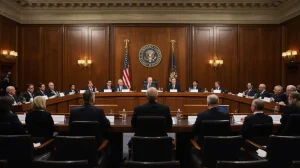








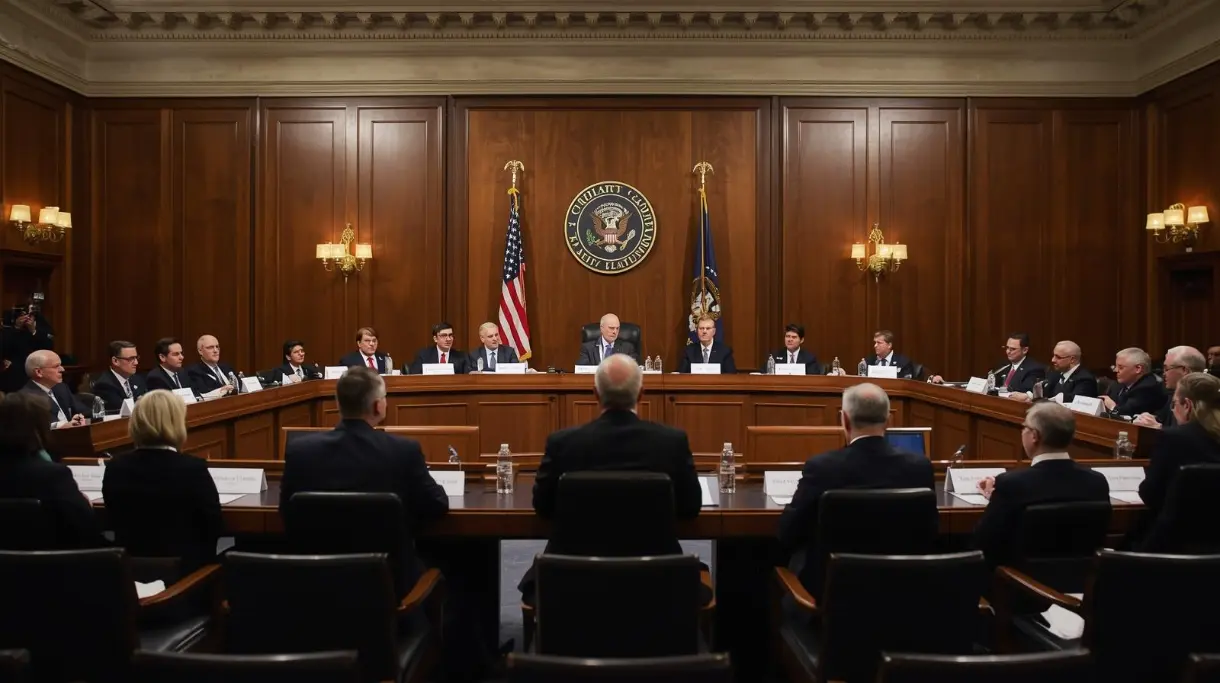
U.S. congressional hearing on financial regulation. Source: TechGaged / Shutterstock
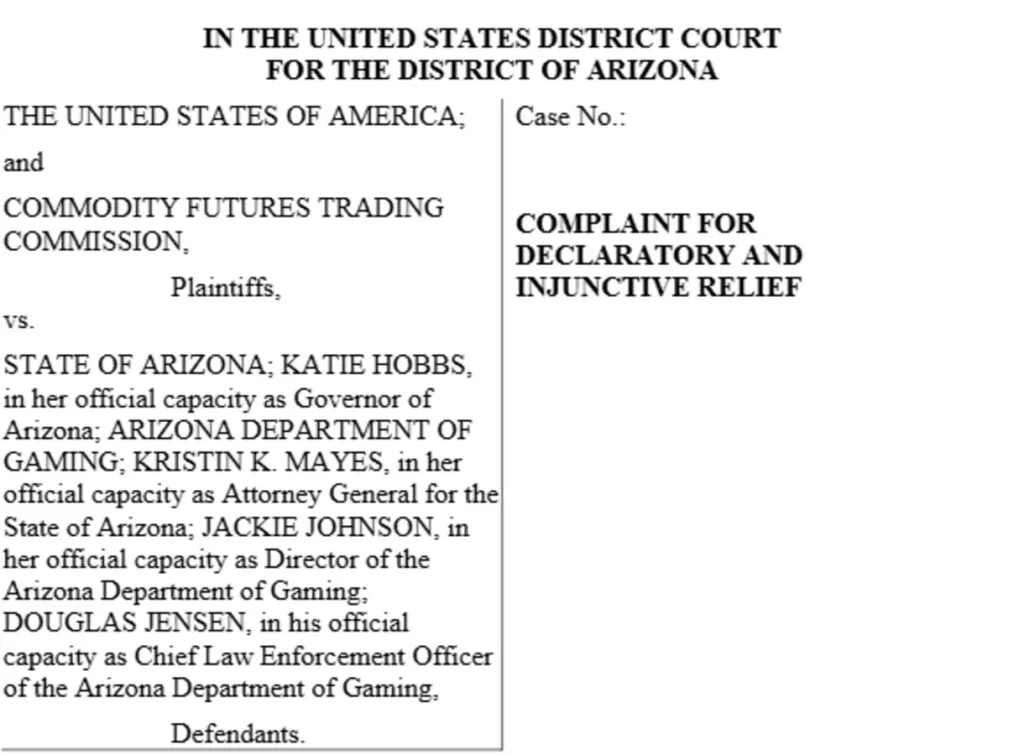
CFTC Sues Arizona, Illinois, Connecticut for Blocking Prediction Markets
In Brief
- • The CFTC sued three states over control of prediction markets.
- • The dispute centers on derivatives versus gambling classification.
- • The outcome could reshape regulation of crypto-linked platforms.
The U.S. Commodity Futures Trading Commission (CFTC) has filed lawsuits against Illinois, Connecticut, and Arizona to assert federal control over prediction markets. The agency argues these platforms fall under derivatives law, not state gambling rules. The move directly impacts platforms like Kalshi and Polymarket, which sit at the edge of cryptocurrency and financial markets.
Federal vs state fight over “event contracts”
As it happens, states argue these platforms operate like online gambling, allowing users to bet on outcomes such as elections or geopolitical events. That view has led to enforcement actions, including criminal charges filed against Kalshi in Arizona.
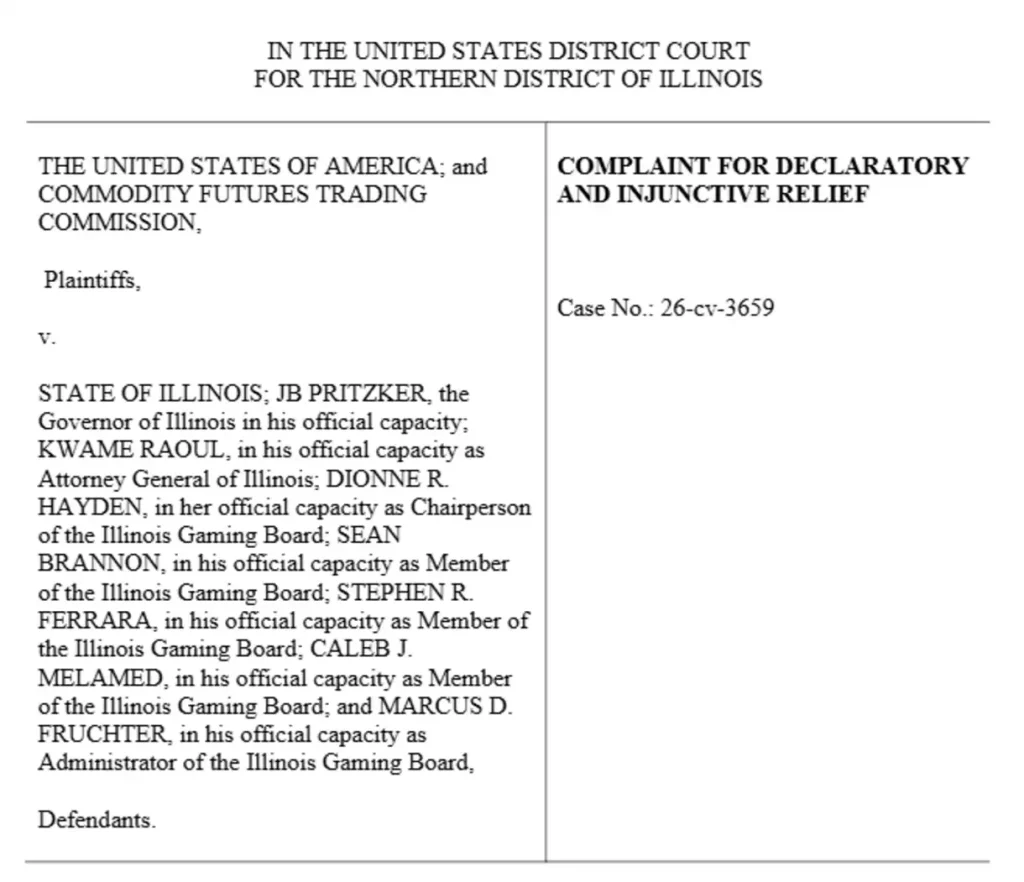
On the other hand, the CFTC classifies these products as “event contracts,” a type of financial derivative similar to swaps. Under U.S. law, derivatives markets fall under federal oversight, not state gaming commissions, the regulator said in a press release on April 2.
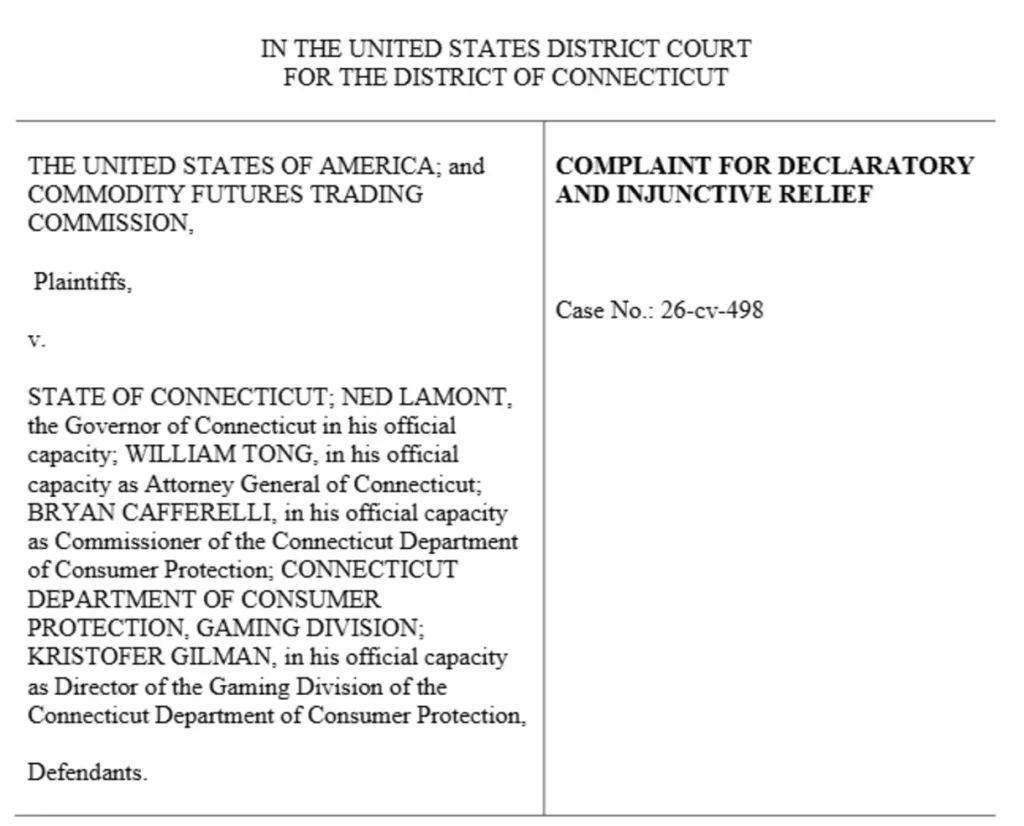
If the courts side with the CFTC, prediction markets would operate under a single national framework instead of navigating different state rules. CFTC Chairman Michael Selig made the position clear, arguing that a fragmented system increases risk and weakens oversight.
“This is not the first time states have tried to impose inconsistent and contrary obligations on market participants, but Congress specifically rejected such a fragmented patchwork of state regulations because it resulted in poorer consumer protection and increased risk of fraud and manipulation.”
Either way, Selig vowed that his agency “will continue to safeguard its exclusive regulatory authority over these markets and defend market participants against overzealous state regulators.”
As a reminder, a bipartisan group of U.S. senators earlier introduced a bill to ban sports betting contracts on prediction markets, including on Kalshi and Polymarket, known as the BETS OFF Act, which threatens to block a growing segment of trading activity tied to sports outcomes.
Implications for crypto and onchain markets
Prediction markets have become one of the fastest-growing sectors tied to the crypto industry. Platforms like Polymarket rely on blockchain infrastructure and stablecoins, attracting global liquidity and bypassing traditional betting systems.
That growth has brought regulatory pressure. The lawsuits signal a shift from passive oversight to direct legal action aimed at defining jurisdiction. If the CFTC wins, it could open the door for broader institutional participation, since derivatives markets are already a regulated space.
If states push back successfully, the industry could face a patchwork of restrictions that limit access and liquidity. Nevertheless, the outcome will shape how event-based trading evolves.
And for crypto-linked platforms, it may determine whether they are treated as financial infrastructure or as gambling.
How do you rate this article?
Subscribe to our YouTube channel for crypto market insights and educational videos.






Join our Socials
Briefly, clearly and without noise – get the most important crypto news and market insights first.
Most Read Today
1
How Accurate Are Robert Kiyosaki’s Predictions?
2TAO Subnet Reality Check: Revenue vs. Subsidies – What Investors Must Know After the Rally
3This Wall Street Giant Bought Crypto Firm Despite Market Slump
4RenderCon 2026 Preview: What the Upcoming Event Means for RENDER Price and Adoption
5Major EU Bank CaixaBank Moves Into Crypto Under MiCA
Latest






8
Also read
Similar stories you might like.

Defi
Coinbase Lands OCC Approval in Major U.S. Crypto Shift
Ana | 2026-04-03

Defi
Ripple’s Brokerage Arm Lands Investment-Grade Rating as Expansion Continues
Rokas | 2026-04-03

Altcoins
NEAR Horizon: Is the Ecosystem Ready for the Next Wave of Mass Adoption?
Azeez | 2026-04-03

Defi
Major EU Bank CaixaBank Moves Into Crypto Under MiCA
Ana | 2026-04-02

Blockchain
Solana-Based Drift Protocol Halts Operations After Security Breach; What Happened?
Ana | 2026-04-02
Defi
This Wall Street Giant Bought Crypto Firm Despite Market Slump
Rokas | 2026-04-02

Defi
Ripple Launches System Letting Firms Manage Crypto Like Cash
Rokas | 2026-04-02

Altcoins
RenderCon 2026 Preview: What the Upcoming Event Means for RENDER Price and Adoption
Azeez | 2026-04-02

Market
Is It a Good Time to Buy Crypto Right Now?
Sead | 2026-04-01

Defi
Australia Passes Crypto Law, Exchanges Face New Rules
Rokas | 2026-04-01