













Bitcoin Iran banknote. Source: TechGaged / Shutterstock
Iran Demands Crypto, Yuan Fees For Passage Through Hormuz
In Brief
- • Ships reportedly pay fees in crypto and yuan for Hormuz passage.
- • The system creates a parallel payment route for global trade.
- • Crypto is being used as functional infrastructure in conflict zones.
Ships moving through the Strait of Hormuz are now paying fees in yuan and stablecoins to secure safe passage, according to multiple industry sources. The tolls can reach roughly $1 per barrel, meaning a single oil tanker may pay millions per trip. The development puts crypto directly into global trade logistics at one of the world’s most critical energy chokepoints.
Crypto enters global shipping routes
The Strait of Hormuz handles about a fifth of global oil and gas flows, making any disruption instantly market-relevant.
Now, access is increasingly tied to payments handled through intermediaries linked to Iran’s Islamic Revolutionary Guard Corps. Ship operators must submit detailed vessel data for approval before negotiations even begin.
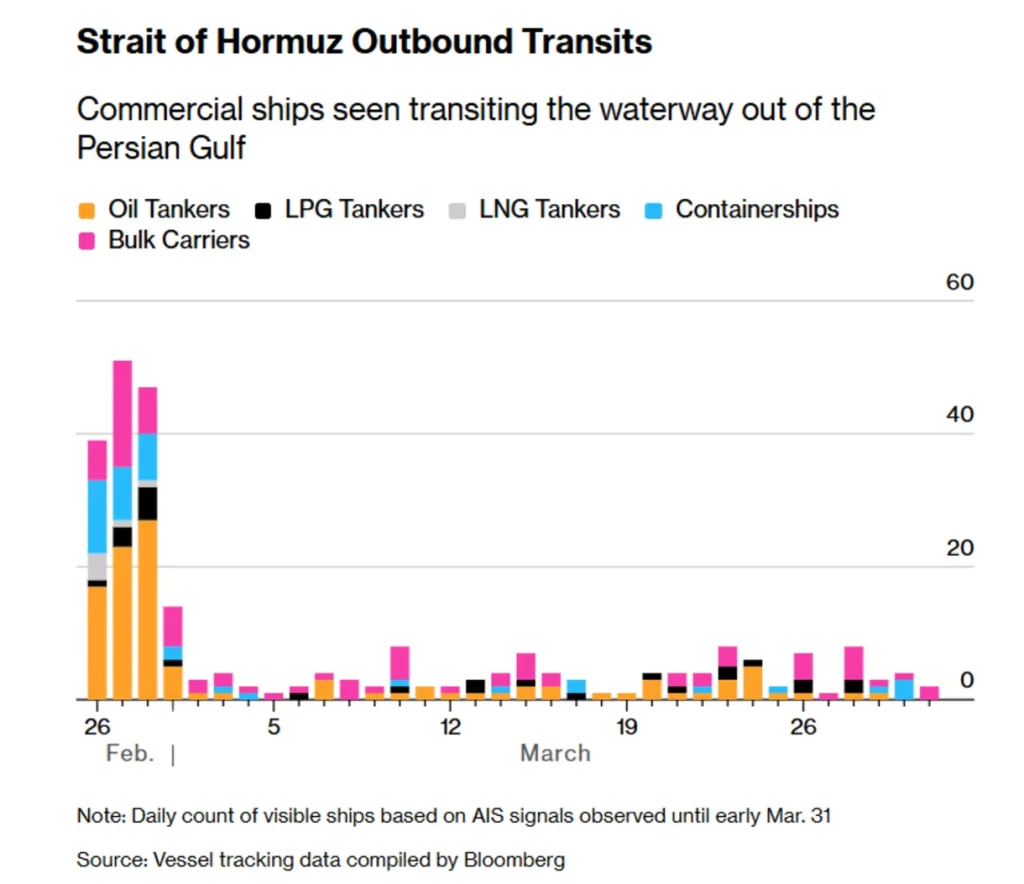
According to a Bloomberg report published on April 1, the ships, if cleared, are offered passage terms that may include payment in Chinese yuan or stablecoins pegged to fiat currencies.
Once paid, vessels receive a permit code and are escorted through the strait by Iranian patrol boats. For a standard very large crude carrier carrying around 2 million barrels, the cost can climb into the millions depending on the negotiated rate.
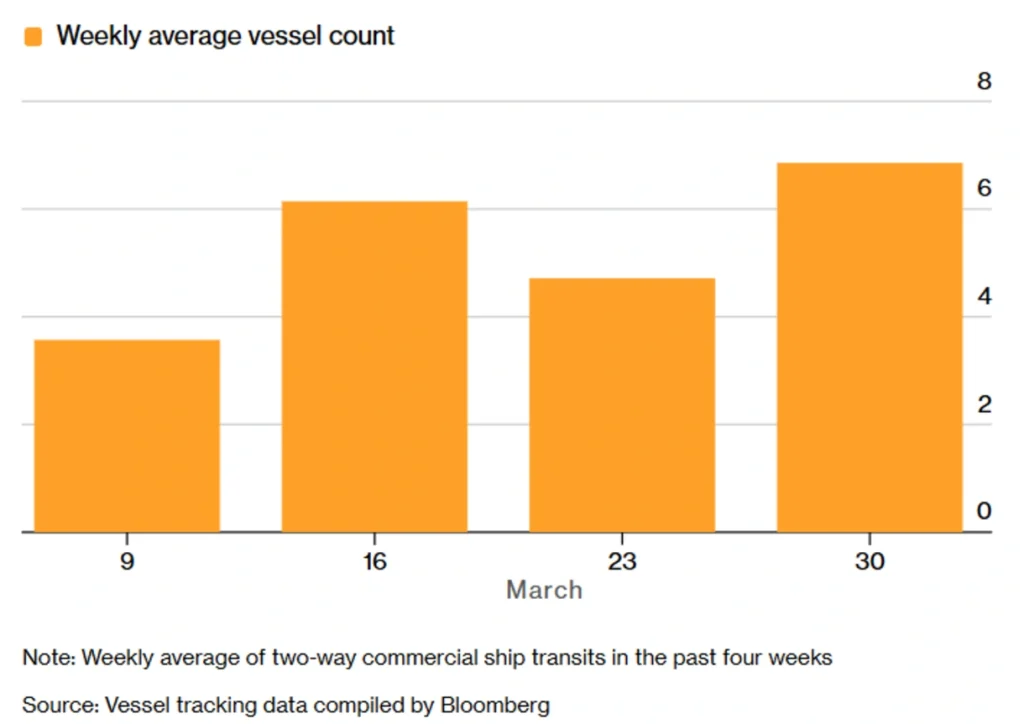
This effectively creates a parallel payment system for global trade, where crypto acts alongside traditional currencies to settle high-stakes transactions under geopolitical pressure.
Why crypto?
Stablecoins allow fast settlement without relying on Western banking rails, which are often under restrictions by sanctions. They also reduce potential issues in cross-border payments when dealing with counterparties under scrutiny.
For ship operators, the decision is about survival, as insurance costs have surged and vessels have already suffered drone attacks, at a place and time when traditional naval protection remains uncertain.
That leaves companies weighing legal risk against operational risk. Paying in crypto could expose them to sanctions violations, but refusing may mean staying stranded or facing physical danger.
The result is a rare real-world use case where crypto is functional infrastructure. Its role in this case is to move energy across borders in a conflict zone, where speed, neutrality, and access weigh a lot more than regulation or ideology.
How do you rate this article?
Subscribe to our YouTube channel for crypto market insights and educational videos.






Join our Socials
Briefly, clearly and without noise – get the most important crypto news and market insights first.







8
Also read
Similar stories you might like.

Defi
Ripple Launches System Letting Firms Manage Crypto Like Cash
Rokas | 2026-04-02

Altcoins
Kiyosaki Warns of Inflation Crisis, Lists 6 Safest Investments for 2026
Rokas | 2026-04-01

Defi
Senator Lummis Warns Crypto Bill Delay Risks U.S. Financial Position
Ana | 2026-03-26

Industry
U.S. Crypto Regulation Breakthrough Pushes Clarity Act Closer to Reality
Ana | 2026-03-23

Research
Stablecoins Are Quietly Rewiring Global Finance, And Most People Haven’t Noticed
Sead | 2026-03-20