














Bitcoin mining chip. Source: TechGaged / Shutterstock
Bitcoin Miners Turn to AI as Profits Collapse
In Brief
- • Bitcoin mining costs are rising while revenues decline.
- • Some miners are shifting toward AI for better returns.
- • The sector is moving beyond a pure Bitcoin-focused model.
Ad
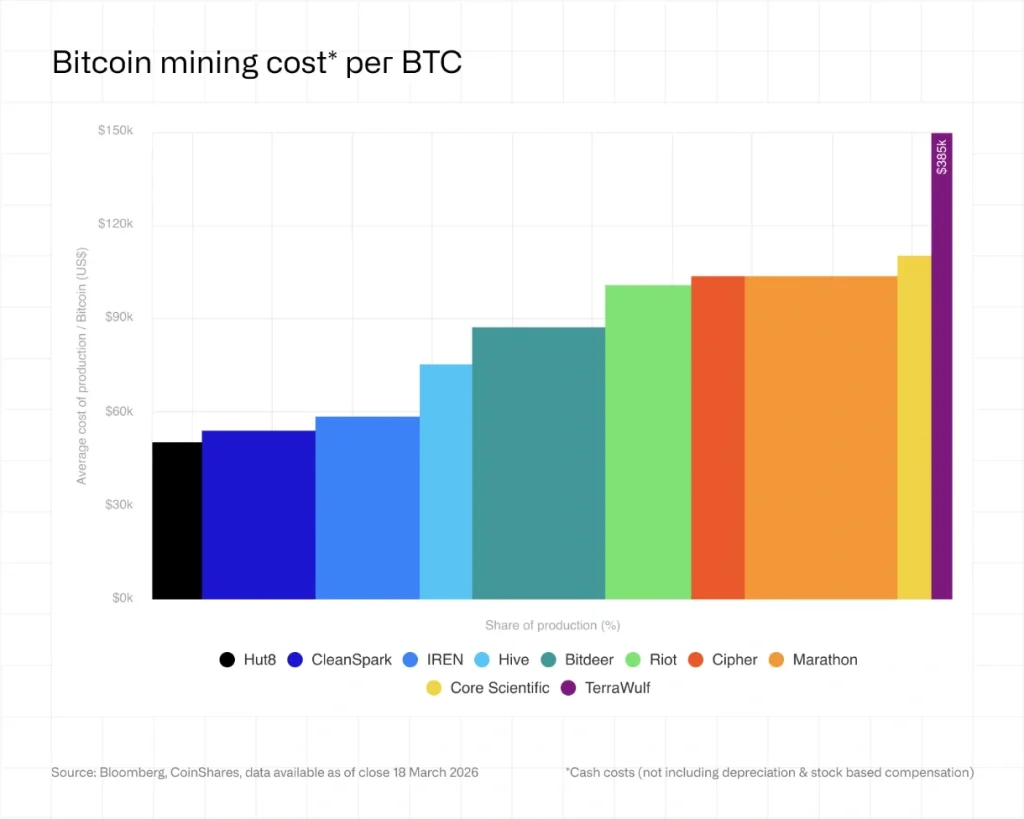
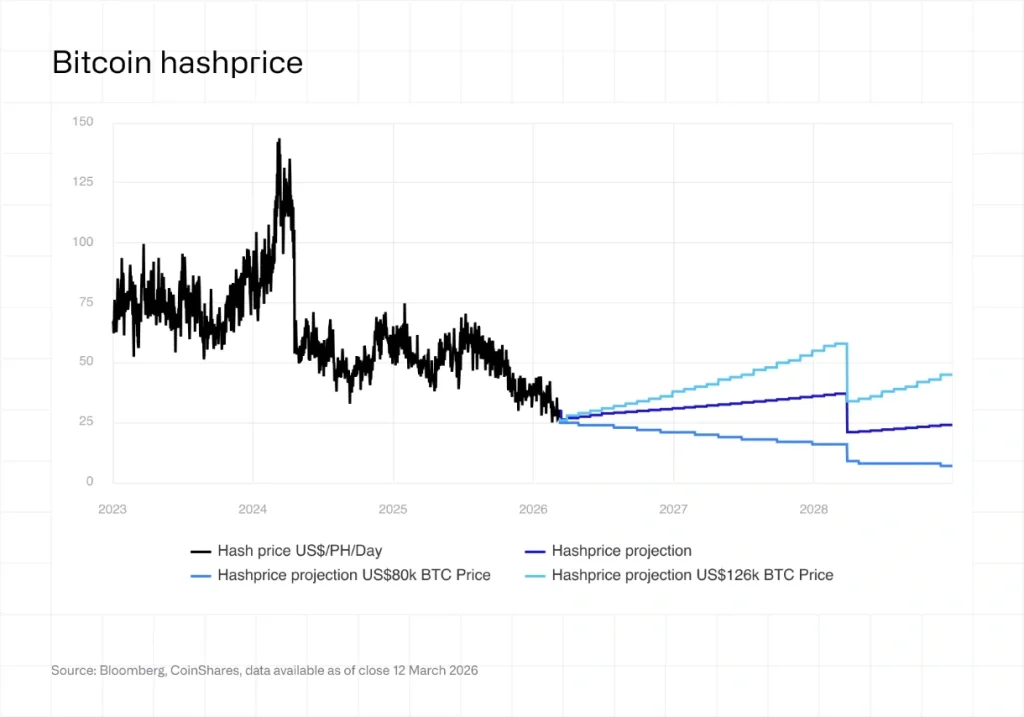
Bitcoin (BTC) miners are under fresh pressure after one of the toughest quarters since the April 2024 halving. CoinShares says the weighted average cash cost to produce one Bitcoin among public miners rose to about $79,995 in Q4 2025, while hash price fell further to roughly $29 per PH/s/day in Q1 2026. That combination is forcing a sharper split between miners still focused on Bitcoin and those turning into AI infrastructure businesses.
Mining margins are getting crushed
In a recent report, published on March 25, CoinShares described Q4 2025 as the most difficult quarter for miners since the halving, with Bitcoin’s pullback from about $124,500 in early October to about $86,000 by late December squeezing an industry already dealing with near-record hashrate.
Hash price dropped to near breakeven in Q4 and then slid further in Q1, intensifying pressure on operators running older machines.
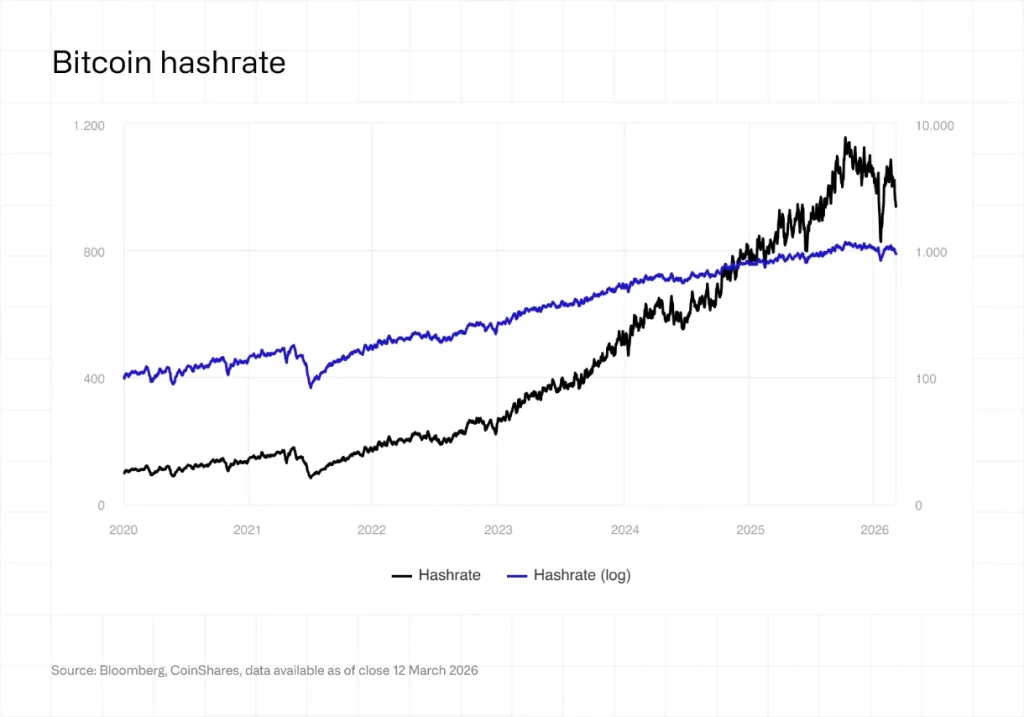
The network itself remains huge, but the economics have worsened. Bitcoin surpassed 1 zettahash in late August 2025 and peaked near 1,160 EH/s in early October before falling back.
CoinShares says any miner running below an S19 XP at electricity costs of 6 cents per kWh or more is now losing money, a group it estimates represents roughly 15% to 20% of the global fleet.
That explains why the report flagged three straight negative difficulty adjustments as a sign of capitulation. Some miners are already selling treasury holdings and cutting exposure just to stay afloat.
Why AI is changing the mining business
The bigger shift is where miners think the better economics are. CoinShares says listed miners could derive as much as 70% of their revenue from AI by the end of this year, up from roughly 30% now, with more than $70 billion in cumulative AI and high-performance computing (HPC) contracts announced across the sector.
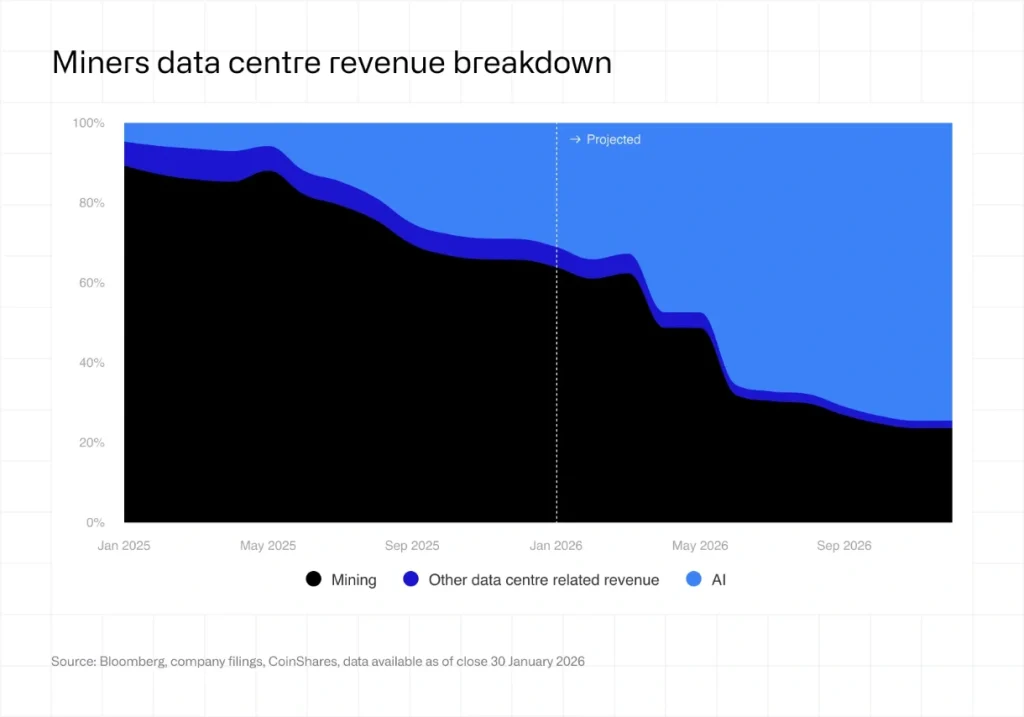
That has changed the sector’s risk profile. Companies like TeraWulf, Core scientific, Cipher Digital, and Hut 8 are increasingly being valued as data-center operators that still happen to mine Bitcoin. At the same time, leverage is rising fast as firms borrow heavily to build AI capacity.
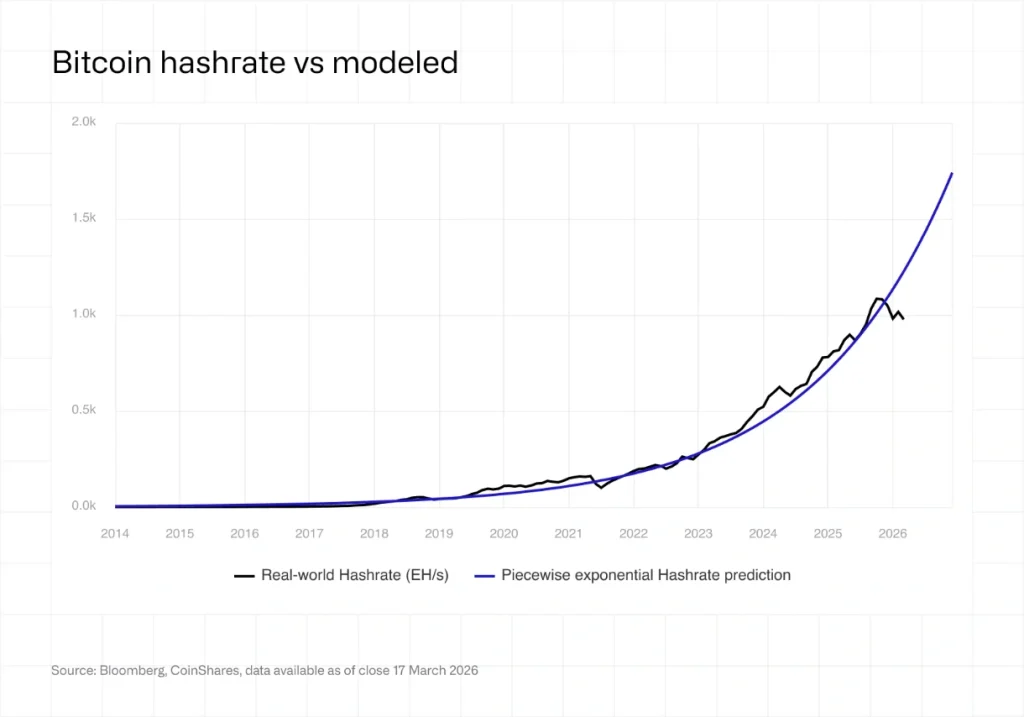
CoinShares still expects hashrate to reach 1.8 zetahash by the end of 2026, but the message from this report suggests that mining is no longer a simple Bitcoin story. It is turning into a fight over energy, balance sheets, and whether AI now offers a better business than mining itself.
How do you rate this article?
Subscribe to our YouTube channel for crypto market insights and educational videos.






Join our Socials
Briefly, clearly and without noise – get the most important crypto news and market insights first.
Most Read Today
1
Sui Approaches 800K Users as Token Unlock Nears — Can Price Stay Resilient?
2Could SpaceX’s IPO Be the Catalyst That Sends Dogecoin Above $0.10?
3TRON Moves Toward Institutions: How Anchorage Support Could Influence TRX Price
4Mystery Deepens as $400M ‘Lost’ Bitcoin Suddenly Moves
5Gold Enters DeFi: Tether’s XAUt Expansion to BNB Chain Could Shift Market Dynamics
Latest





8
Also read
Similar stories you might like.

Bitcoin
Mystery Deepens as $400M ‘Lost’ Bitcoin Suddenly Moves
Rokas | 2026-03-30

Altcoins
Kiyosaki Warns of Inflation Crisis, Lists 6 Safest Investments for 2026
Rokas | 2026-03-30

Altcoins
Sui Approaches 800K Users as Token Unlock Nears — Can Price Stay Resilient?
Azeez | 2026-03-29

Altcoins
Ethereum ETFs Post 7 Days of Outflows; Tom Lee Says $250,000 Is Coming. Who’s Right?
Azeez | 2026-03-28

Bitcoin
Bitcoin FUD Is Everywhere Right Now And That May Be Bullish
Ana | 2026-03-27

Bitcoin
Gold Drops But Bitcoin Isn’t Taking Over Yet; Here’s Why
Ana | 2026-03-27

Bitcoin
Peter Schiff Slams Bitcoin Mortgages As “Horrible Idea”, Explains Why
Ana | 2026-03-27

Altcoins
Volatility Risk Builds as Bitcoin, Ethereum Face Largest 2026 Options Expiry Event
Rokas | 2026-03-27

Bitcoin
$45M Bitcoin Outflow From Bhutan Raises Market Questions
Rokas | 2026-03-27

Bitcoin
Morgan Stanley Bitcoin ETF Launch Imminent After NYSE Listing
Ana | 2026-03-26