












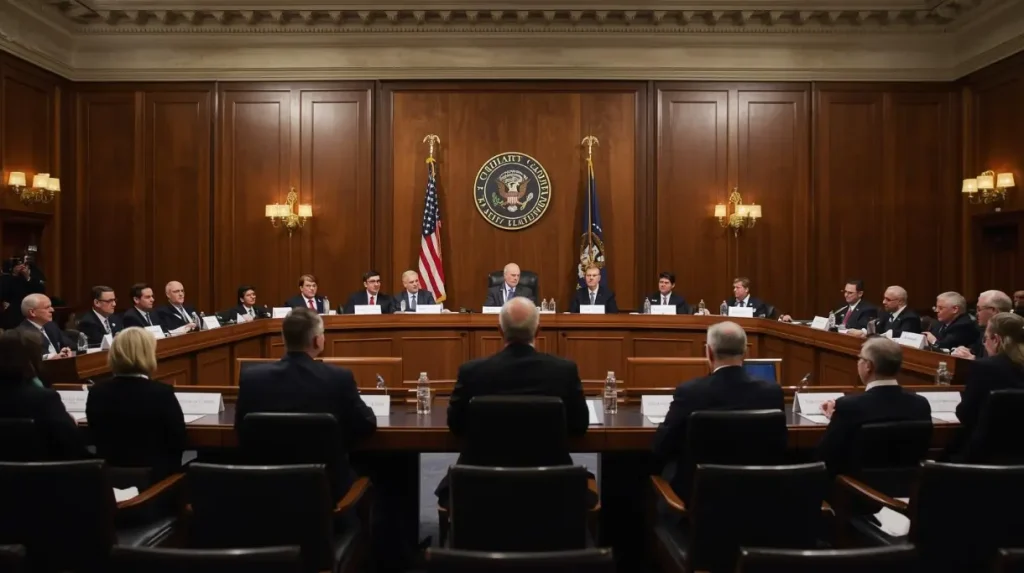
SEC website screen. Source: TechGaged / Shutterstock
SEC Move Opens New Phase For Bitcoin And Ethereum ETFs
In Brief
- • A rule change expands Bitcoin and Ethereum ETF options trading.
- • Key restrictions are removed, allowing more flexible strategies.
- • The update takes effect immediately, impacting market activity.
Ad
NYSE Arca filed a rule change with the U.S. Securities and Exchange Commission (SEC) to expand how options on Bitcoin (BTC) and Ethereum (ETH) exchange-traded funds (ETFs) are traded, with immediate effectiveness. The update removes key position limits and allows broader use of FLEX options across major cryptocurrency funds. The shift aligns crypto ETF options with standard equity options, opening the door to larger and more flexible trading strategies.
What the rule change actually does
Published on March 23, the filing amends multiple exchange rules to adjust how options tied to crypto ETFs are handled, including products like the iShares Bitcoin Trust, Fidelity Wise Origin Bitcoin Fund, and Grayscale Ethereum Trust.
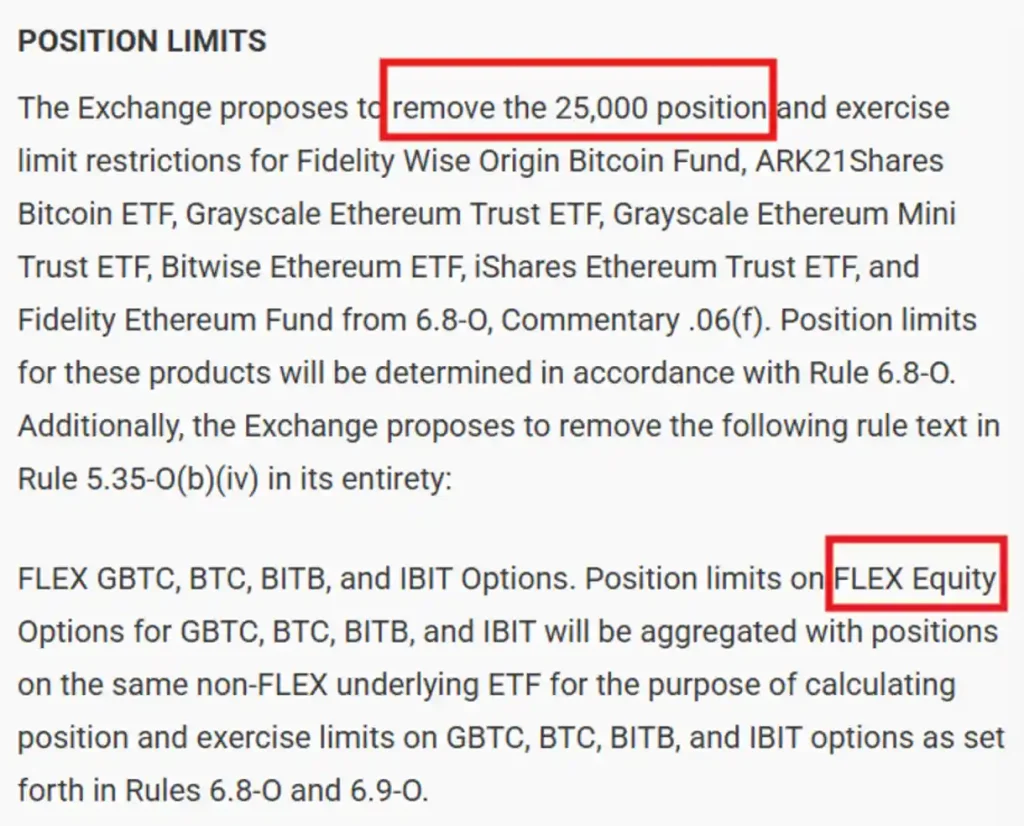
One of the biggest changes is the removal of the 25,000-contract position and exercise limits that previously applied to several of these products. Instead, these options will now follow broader exchange-wide limits used for other asset classes.
The update also expands access to FLEX options. These are customizable contracts where traders can set specific terms such as expiration dates and strike prices. Previously, some crypto ETF options faced restrictions in this area, which are now being removed.
Another adjustment removes the requirement to aggregate FLEX and non-FLEX positions when calculating limits for certain Bitcoin ETF options. That simplifies how large positions are managed and reported.
The SEC allowed the rule to become effective immediately, stating it does not introduce new regulatory risks and aligns with existing frameworks across other exchanges.
Why this is important for crypto markets
This is a structural upgrade to the crypto derivatives market in the U.S.
By removing tight position limits, the change allows institutional players to take larger positions in Bitcoin and Ethereum ETF options without hitting early caps. That increases liquidity potential and makes these products more useful for hedging and complex strategies.
The expansion of FLEX options is just as important. Institutions often rely on tailored contracts to manage risk, and the previous restrictions limited the structuring possibilities for crypto exposure.
There is also a standardization angle. Treating crypto ETF options like other equity options reduces friction for firms already active in traditional markets.
The immediate effect is notable. Traders do not need to wait for a long approval process, meaning these changes can start influencing positioning and liquidity right away.
The broader takeaway is the folding of crypto-linked derivatives deeper into traditional market infrastructure, with fewer special restrictions holding them back.
How do you rate this article?
Subscribe to our YouTube channel for crypto market insights and educational videos.






Join our Socials
Briefly, clearly and without noise – get the most important crypto news and market insights first.
Most Read Today
1
Cardano’s $10 Million Question: Will Bulls Survive the Liquidity Sweep?
2Goldman Sachs Is XRP’s Biggest ETF Buyer — What the Pros See That Retail Might Be Missing
3$3B in RWA TVL and Counting: Can BNB Flip Solana’s Crown?
4The Real Bitcoin Story Isn’t Just the Fed — A 2012 Whale Reshuffled $146M: What It Means
5R. Kiyosaki: Bitcoin Could Hit $750,000 as ‘Biggest Bubble’ Is About to Burst
Latest





8
Also read
Similar stories you might like.

Market
Crypto Trading Volume Collapse: March on Track for Worst Month Since 2020
Jastra | 2026-03-23

Industry
U.S. Crypto Regulation Breakthrough Pushes Clarity Act Closer to Reality
Ana | 2026-03-23

Bitcoin
Bitcoin Crash Fears Return as Market Pressure Builds
Ana | 2026-03-23
Industry
New Threat to Prediction Markets as U.S. Crackdown Expands
Rokas | 2026-03-23

Altcoins
$3B in RWA TVL and Counting: Can BNB Flip Solana’s Crown?
Azeez | 2026-03-22

Altcoins
Goldman Sachs Is XRP’s Biggest ETF Buyer — What the Pros See That Retail Might Be Missing
Azeez | 2026-03-22

Altcoins
Cardano’s $10 Million Question: Will Bulls Survive the Liquidity Sweep?
Azeez | 2026-03-22

Altcoins
The Real Bitcoin Story Isn’t Just the Fed — A 2012 Whale Reshuffled $146M: What It Means
Azeez | 2026-03-22

Altcoins
After GTC 2026, Which AI Token Stands to Win? The Case for Bittensor
Azeez | 2026-03-21

Altcoins
River’s $26 Million Unlock Is Imminent — Will It Trigger a Sell-Off or a ‘Buy the Rumor’ Rally?
Azeez | 2026-03-21