











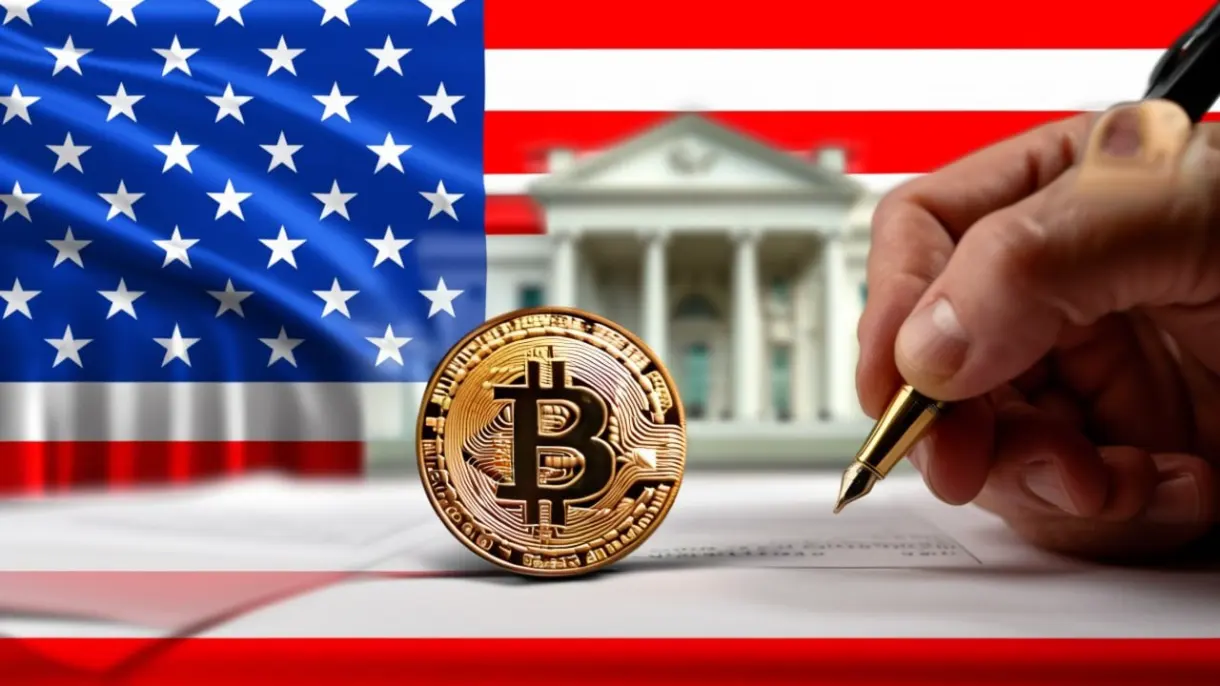
Bitcoin coin and signing hand with U.S. flag and White House in background. Source: TechGaged / Shutterstock
Bitcoin Rights Bill Clears Indiana Legislature; Here’s What It Means
In Brief
- • Indiana passed a bill protecting Bitcoin user rights.
- • It includes self-custody protections and retirement access.
- • Final impact depends on the governor’s approval.

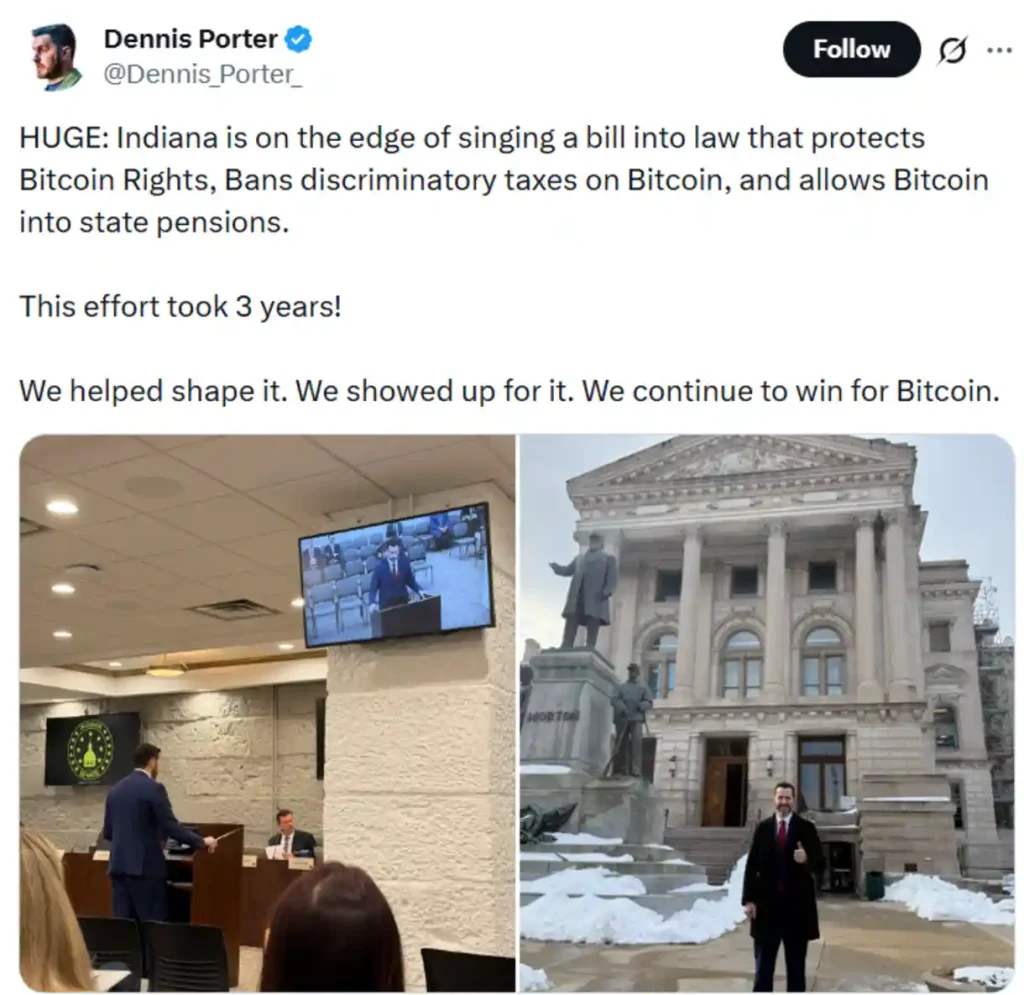
Indiana lawmakers have passed a bill aimed at protecting Bitcoin (BTC) users and expanding digital asset access, with the legislation now awaiting the governor’s signature. The proposal includes protections for self-custody and opens the door to cryptocurrency exposure in state retirement plans.
A Broad Crypto Rights Framework
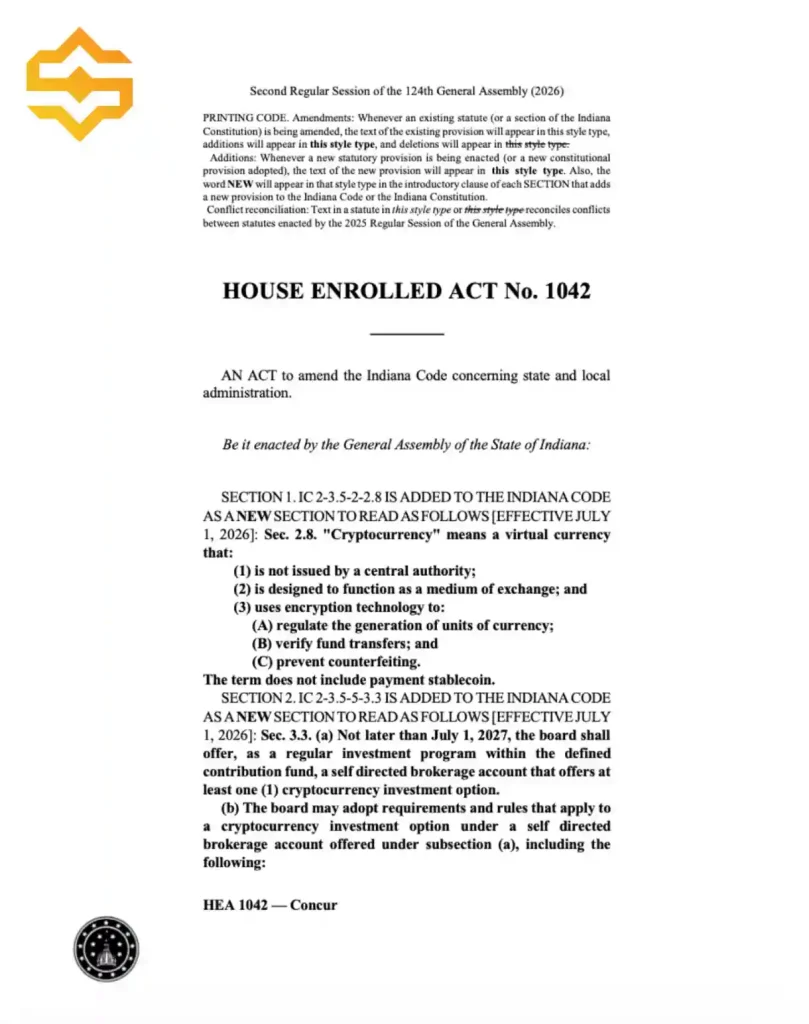
House Enrolled Act 1042 cleared both chambers of the Indiana legislature and would establish new legal protections around cryptocurrency use if signed into law. Supporters say the bill is designed to prevent discrimination against digital assets, at the same time clarifying how crypto is treated under state rules.
Among its provisions, the legislation would protect the right to self-custody digital assets, run blockchain nodes, and transact peer-to-peer. It also aims to prevent what proponents describe as discriminatory taxation targeting crypto transactions.
The bill additionally outlines requirements for state retirement systems. Under the proposal, pension boards would need to offer at least one cryptocurrency investment option through a self-directed brokerage structure.
Crypto access expanding at the state level
The measure reflects a broader trend of U.S. states experimenting with crypto-friendly frameworks, particularly around retirement exposure and user rights. Several jurisdictions have explored allowing digital assets in pension allocations or introducing legal protections for self-custody.
Supporters argue these policies align with growing retail and institutional interest in Bitcoin and other digital assets. Critics, however, often point to volatility and fiduciary concerns when it comes to retirement fund exposure.
If enacted, the Indiana bill would add to a growing patchwork of state-level crypto legislation shaping the U.S. regulatory scene. Though federal agencies continue debating national frameworks, individual states are increasingly moving ahead with their own rules.
Awaiting final approval
The legislation will take effect only if signed by the governor. If enacted, some provisions could roll out in stages, including timelines for retirement system implementation.
For now, the bill’s passage marks another milestone in the evolving relationship between U.S. policymakers and digital assets. As states continue testing crypto policy models, outcomes like Indiana’s could influence how similar proposals unfold across the country.
More Must-Reads:
How do you rate this article?
Subscribe to our YouTube channel for crypto market insights and educational videos.






Join our Socials
Briefly, clearly and without noise – get the most important crypto news and market insights first.
Most Read Today
1
Donald Trump’s Actions Cost Bitcoin $240B Since 2019 — Report
2This Event Could Shake XRP
3Exclusive: Dr. Persichetti Challenges Key Claims in Cointelegraph’s Quantum Crypto Analysis
4Bittensor (TAO) Extends Losses—Why Smart Money Is Watching Closely
5Is It a Good Time to Buy Crypto Right Now?
Latest






8
Also read
Similar stories you might like.

Altcoins
Crypto Market Adds $100B as Bitcoin Leads Rally
Ana | 2026-04-14

Industry
Extortion Attempt Targets Kraken After Internal Access Misuse
Ana | 2026-04-14
Blockchain
SEC Clarifies When Crypto Interfaces Avoid Broker-Dealer Registration
Ana | 2026-04-14
Blockchain
X Exec Nikita Bier Drops Crypto Tease Amid Rough Year
Rokas | 2026-04-14

Defi
Deutsche Börse Pushes Deeper Into Crypto With Kraken Bet
Rokas | 2026-04-14

Altcoins
Bittensor (TAO) Extends Losses—Why Smart Money Is Watching Closely
Azeez | 2026-04-14

Bitcoin
The Calm Before the Storm? What Low Stablecoin Activity Means for ETH
Azeez | 2026-04-14

Altcoins
Crypto Loses $70B as Macro Pressure Builds; This Is Driving It
Ana | 2026-04-14

Bitcoin
New Tech: Bitcoin Builders and SEC Commissioner Speak at MIT Expo
Ana | 2026-04-14
Altcoins
This Event Could Shake XRP
Azeez | 2026-04-13