





SEC website on a screen. Source: TechGaged / Shutterstock
Chainlink Lawyer Joins SEC Crypto Unit: End of Regulation by Enforcement?
In Brief
- • Ex-Chainlink lawyer joins SEC crypto unit.
- • Hester Peirce welcomes industry hire.
- • Signals possible softer enforcement tone.
The U.S. Securities and Exchange Commission has appointed former Chainlink Labs executive Taylor Lindman as chief counsel of its cryptocurrency task force. Commissioner Hester Peirce confirmed the move, welcoming Lindman on his first day at the agency. The hire brings a senior industry legal figure directly into the SEC’s crypto policy apparatus.
A Direct Move From Industry to Regulator
Notably, Lindman spent about five years at Chainlink Labs, where he served as deputy general counsel and worked on legal strategy around blockchain infrastructure and digital asset adoption.
Chainlink publicly confirmed the appointment, thanking him for his role at the company and signaling support for broader financial system modernization.
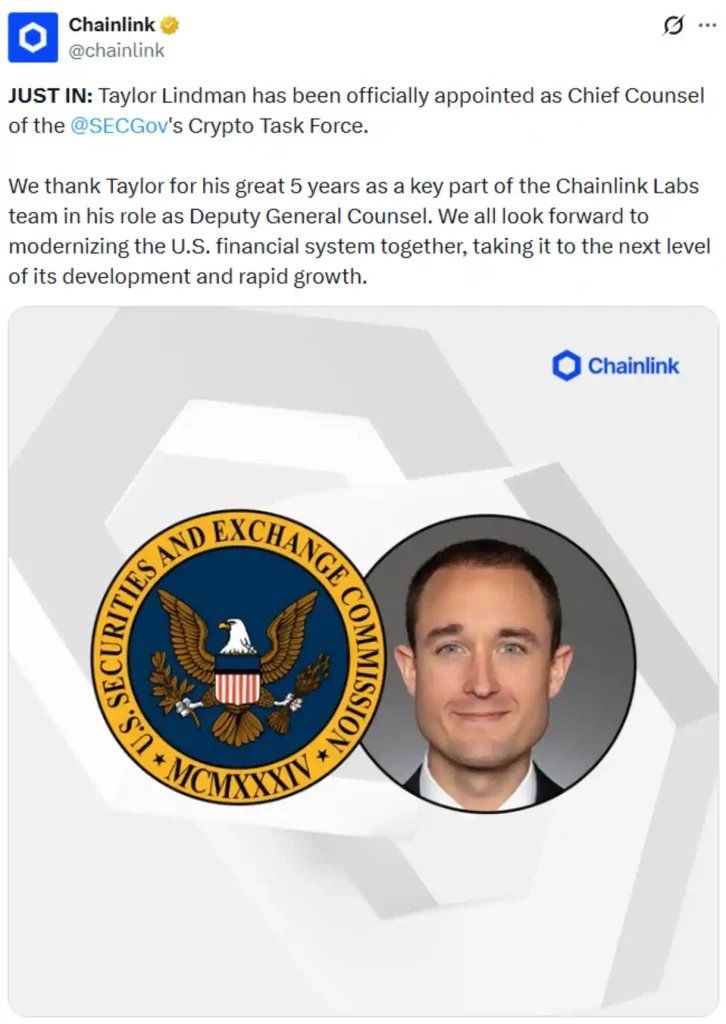
Meanwhile, the SEC’s crypto task force has been positioned as a hub for shaping the agency’s evolving approach to digital assets. In fact, by recruiting someone with hands-on experience inside a major Web3 infrastructure provider, the Commission is adding an industry perspective to a regulatory body that has often received criticism for limited technical exposure.
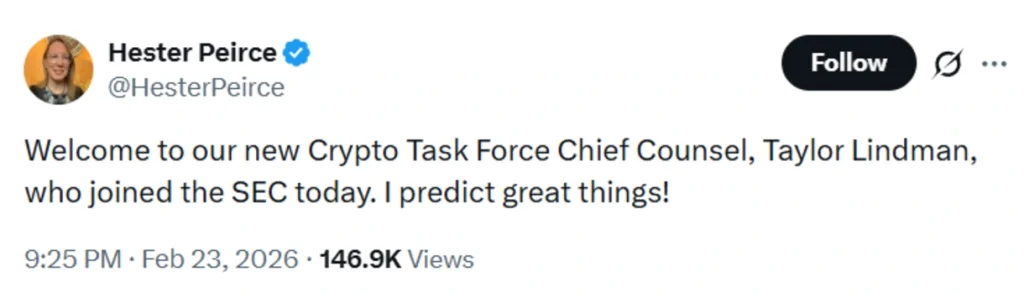
Moreover, Commissioner Hester Peirce, widely seen as one of the SEC’s more crypto-forward voices, publicly welcomed Lindman and predicted strong contributions to the task force.
Why This Appointment Matters
The hire stands out because it reflects a growing pattern of talent flowing between crypto firms and regulators. That dynamic can reshape how policy is formed, especially as digital asset rules in the U.S. remain fragmented and politically sensitive.
Above all, appointments like this represent closely watched signals for the market. Industry participants often interpret them as clues about future regulatory tone, enforcement priorities, and openness to innovation.
Indeed, a legal leader coming from a major infrastructure project may influence how the SEC approaches areas like decentralized networks and tokenized finance.
It does not guarantee a policy shift on its own, but it adds context to the broader regulatory narrative. All things considered, as Washington continues debating crypto oversight, personnel moves inside agencies may act as early indicators of where the conversation is heading next.
More Must-Reads:
How do you rate this article?
Subscribe to our YouTube channel for crypto market insights and educational videos.






Join our Socials
Briefly, clearly and without noise – get the most important crypto news and market insights first.






8
Also read
Similar stories you might like.

Altcoins
Post-Ceasefire Crypto Outlook: Hangover or Buying Opportunity Ahead?
Azeez | 2026-04-12

Bitcoin
Oil Loses $100 Grip — Will Bitcoin Benefit From the Shift?
Azeez | 2026-04-12

Altcoins
Arthur Hayes’ $1.1M HYPE Bet: Is ETF Buzz Igniting a Surge?
Azeez | 2026-04-12

Altcoins
April 12 Token Unlock: What it Could Mean for Aptos Price
Azeez | 2026-04-12
Altcoins
3 Cryptocurrencies to Avoid in April
Azeez | 2026-04-11

Altcoins
Solana Price Outlook as SOL Hits 167M Users in April
Azeez | 2026-04-11

Altcoins
2 Cryptocurrencies to Buy in April
Azeez | 2026-04-11

Altcoins
CME Group To Launch Sui Futures and Institutions Are Betting Big On It
Azeez | 2026-04-11

Bitcoin
Bitcoin Holds Ground as Oil and War Headlines Clash
Ana | 2026-04-10
Altcoins
Will BNB Chain’s Annual Percentage Yield Surge Push Prices Higher or Be a Trap?
Azeez | 2026-04-10