













Bitcoin coin with U.S. flag and White House backdrop. Source: TechGaged / Shutterstock
U.S. Midterms Could Drive Crypto Cycle, Analyst Says
In Brief
- • Analyst links 2026 U.S. midterms to crypto cycles.
- • Thesis ties elections to liquidity-driven risk rallies.
- • Impact remains speculative and macro-dependent.
Ad
A new macro narrative is circulating in cryptocurrency circles, suggesting the 2026 U.S. midterm elections could act as a market catalyst. The idea ties election-year dynamics to liquidity shifts and asset price cycles. The claim is adding to a broader debate about how politics influences crypto markets.
Politics Enters The Crypto Narrative Again
In a market commentary shared in an X post on February 25, renowned crypto trading analyst EGRAG CRYPTO outlined a timeline linking macro liquidity to election incentives. The argument suggests that political pressure during election cycles can align with looser financial conditions, which historically benefit risk assets.
This framing builds on a common thesis in macro trading: markets often move ahead of political events rather than reacting afterward. According to the view, improving asset prices can influence public sentiment, making market strength a potential backdrop during election windows.
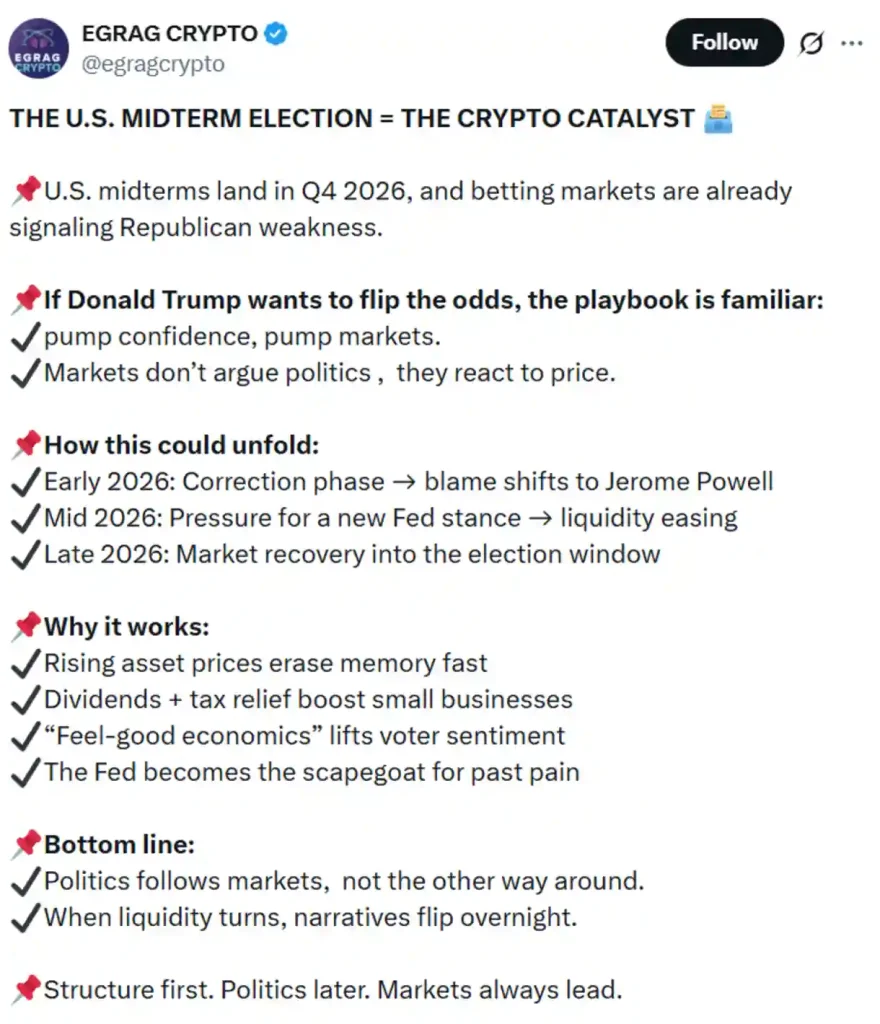
Though the claim remains speculative, politics and the crypto industry have increasingly overlapped in recent years. Industry groups have already ramped up political engagement ahead of upcoming elections, with crypto-backed funding efforts targeting pro-industry candidates.
Why Traders Are Paying Attention
Election cycles have long been studied in traditional markets, where liquidity conditions, fiscal policy expectations, central bank narratives, and the like often intersect with political timing. Some analysts believe similar dynamics are now spilling into digital assets as the sector matures.
At the same time, the relationship is far from deterministic. Historical data show mixed outcomes when linking elections directly to crypto price action, with markets often responding more strongly to liquidity conditions than political events alone.
That uncertainty is why narratives like this tend to gain traction during macro transitions. When liquidity and geopolitics converge, traders often look for larger cyclical explanations to frame volatility.
Currently, crypto’s collective market cap stands at $2.34 trillion, recording a 3.1% gain in the last 24 hours, but declining 4.83% across the past seven days, and accumulating a loss of 23.9% over the month, according to the most recent chart information.
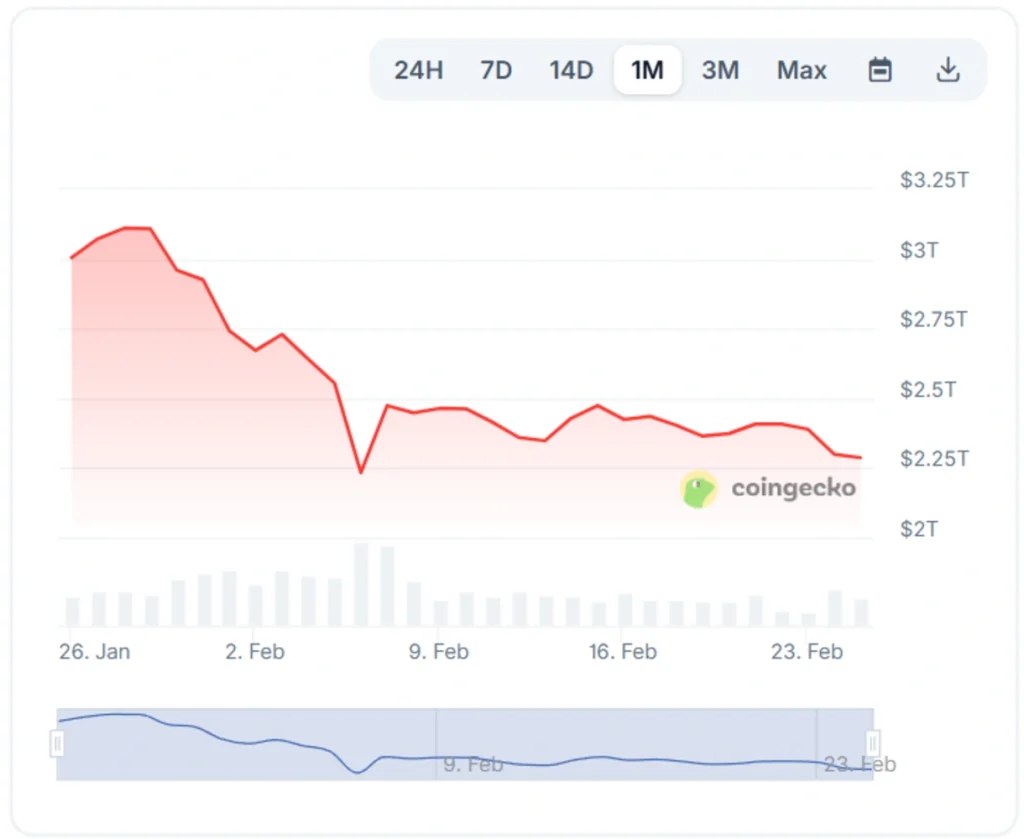
For the moment, the midterm catalyst idea remains part of a broader narrative cycle rather than a confirmed market driver. The possibility of elections meaningfully shaping crypto trends will likely depend less on political calendars and more on monetary policy, regulations, liquidity flows, and institutional positioning in the months ahead.
More Must-Reads:
How do you rate this article?
Subscribe to our YouTube channel for crypto market insights and educational videos.






Join our Socials
Briefly, clearly and without noise – get the most important crypto news and market insights first.
Most Read Today
1
DOGE-BTC Ratio Triggers Historic Cycle Signal; Major Shift In The Making
2Bitcoin Vs Gold Ratio Near 2022 Bear Market Levels; What Next?
3BlackRock’s Next Crypto Move Could Change Ethereum Investing Forever
4Chainlink Lawyer Joins SEC Crypto Unit: End of Regulation by Enforcement?
5Hong Kong Stablecoin Firm Moves Toward $1B U.S. Listing
Latest






8
Also read
Similar stories you might like.

Bitcoin
Traders Are More Afraid Now Than During Past Crashes, Here’s Why
Patrick | 2026-02-25

Bitcoin
TD Cowen Analyst Makes Bullish Bitcoin Case: ‘Stronger, Cheaper Than Ever’
Ana | 2026-02-25

Bitcoin
Rare Solo Bitcoin Mining Win Happens Again: $200K on $75 Equipment
Ana | 2026-02-25

Defi
Mastercard Expands Crypto Push With New Web3 Role
Ana | 2026-02-25

Altcoins
Ripple CTO Pushes Back On Centralization Accusations
Ana | 2026-02-25

Altcoins
DOGE-BTC Ratio Triggers Historic Cycle Signal; Major Shift In The Making
Ana | 2026-02-24

Altcoins
Ethereum Pattern Suggests Potential Move Toward $1K
Ana | 2026-02-24

Altcoins
Analyst Links XRP Reserve Push To Liquidity Crisis; Here’s Why
Ana | 2026-02-24

Bitcoin
Bitcoin Vs Gold Ratio Near 2022 Bear Market Levels; What Next?
Ana | 2026-02-24

Industry
Ukraine And Baltics Bust Crypto Scam Ring Targeting EU Investors
Ana | 2026-02-24