







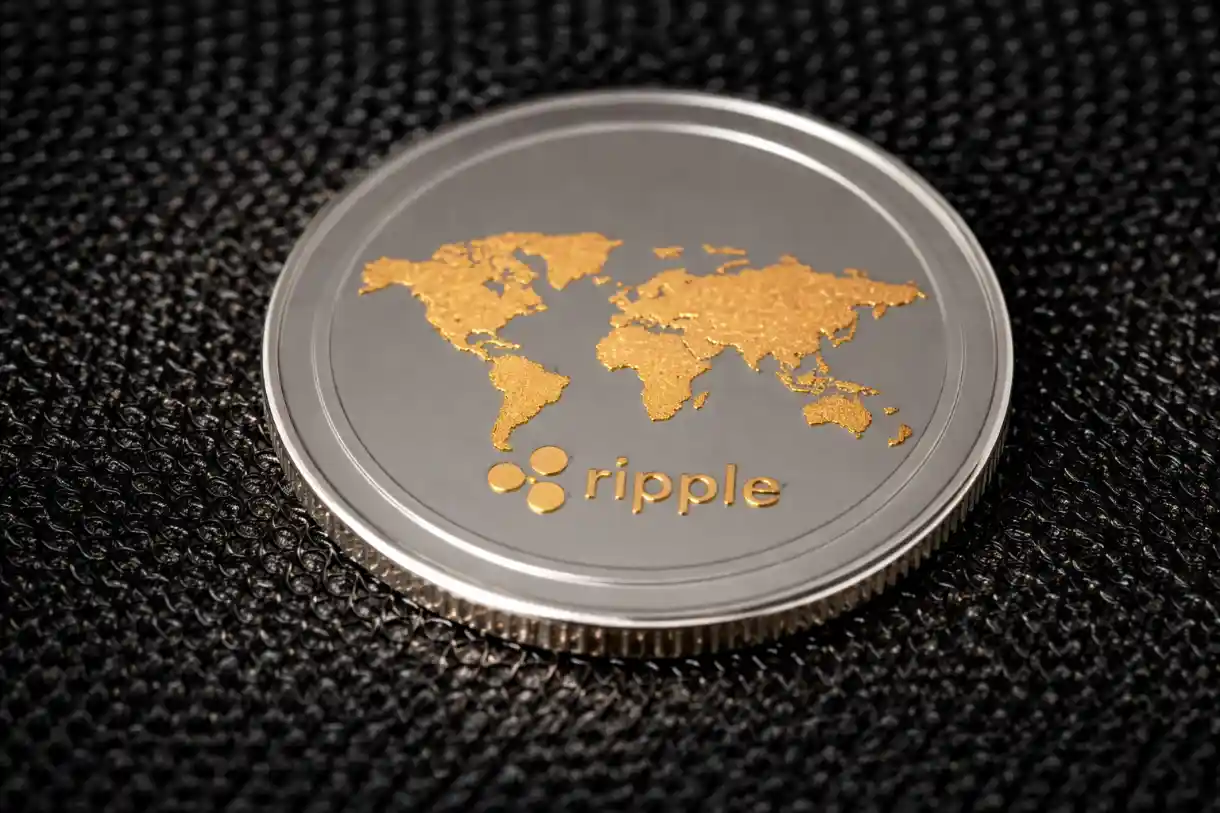
Ripple XRP coin on a dark textured background symbolizing Ripple’s expansion into institutional crypto custody with integrated staking and enhanced security infrastructure.
Ripple Expands Institutional Custody With Staking and Security Integrations
In Brief
- • Ripple is lowering the barrier for banks to offer crypto staking through custody integrations.
- • Ethereum and Solana staking can now be offered without proprietary infrastructure.
- • The move strengthens Ripple’s positioning in institutional crypto services.
Ad
Ripple has officially expanded its institutional custody platform with new integrations designed to unlock security and staking capabilities for regulated financial institutions.
On February 9th, the company announced that it has partnered with Securosys, a leading provider of enterprise-grade hardware security modules, and Figment, a major institutional staking infrastructure provider.
According to Ripple’s press release, these upgrades will allow institutions to deploy custody services and offer staking on major proof-of-stake networks like Ethereum and Solana.
Security and Usability for Institutions
Through its partnership with Securosys, Ripple Custody now integrates CyberVault HSM and CloudHSM technologies.
These enable institutions to manage cryptographic keys securely either on-premises or in the cloud. Effectively simplifying what’s always been an expensive, complex, and time-consuming process for organizations to safely custody digital assets.
Similarly, Ripple’s collaboration with Figment adds staking functionality directly into custody workflows. Meaning that banks and custodians can now support staking rewards on leading proof-of-stake networks without running their own validator nodes.
Moreover, Ripple and Figment executives emphasized that this approach allows regulated institutions to expand their digital asset services. All while maintaining enterprise-level security and operational standards.
Institutional Ripple Adoption and Impact on Price Action
While the announcement focuses on infrastructure, developments like this tend to feed into XRP’s short-term narrative indirectly.
Indeed, expanding Ripple’s institutional custody capabilities strengthens the company’s positioning with banks, custodians, and regulated entities.
In the near term, this type of announcement might act as a sentiment catalyst, not a direct price driver. Therefore, reinforcing confidence during periods of market uncertainty or consolidation.
The key variable to watch in the short term is whether this infrastructure expansion matches with rising volume and improving on-chain activity.
If those signals align, XRP could see follow-through as traders position around the idea that institutional rails are expanding.
On the other hand, banks and custodians often see security, governance, and regulatory compliance as primary concerns when considering crypto custody and yield services like staking.
Therefore, by embedding enterprise-grade HSM support and turnkey staking infrastructure into its custody stack, Ripple is positioning itself as a complete institutional infrastructure provider.
Ultimately, reducing complexity and helping regulated firms overcome technical and compliance hurdles without heavy internal investment.
As a result, this might encourage more banks and regulated entities to offer digital asset products.
More Must-Reads:
How do you rate this article?
Subscribe to our YouTube channel for crypto market insights and educational videos.






Join our Socials
Briefly, clearly and without noise – get the most important crypto news and market insights first.






8
Also read
Similar stories you might like.

Industry
Trump Backs Bitcoin, Stablecoins In New Pro-Crypto Push
Ana | 2026-03-30
Industry
Canada Proposes Ban on Crypto Political Donations
Ana | 2026-03-30
Altcoins
Ethereum Foundation Makes Record ETH Staking Move
Ana | 2026-03-30
Bitcoin
Bitcoin Miners Turn to AI as Profits Collapse
Ana | 2026-03-30
Bitcoin
Mystery Deepens as $400M ‘Lost’ Bitcoin Suddenly Moves
Rokas | 2026-03-30

Altcoins
Kiyosaki Warns of Inflation Crisis, Lists 6 Safest Investments for 2026
Rokas | 2026-03-30
Altcoins
TRON Moves Toward Institutions: How Anchorage Support Could Influence TRX Price
Azeez | 2026-03-29
Altcoins
Gold Enters DeFi: Tether’s XAUt Expansion to BNB Chain Could Shift Market Dynamics
Azeez | 2026-03-29
Altcoins
Sui Approaches 800K Users as Token Unlock Nears — Can Price Stay Resilient?
Azeez | 2026-03-29
Altcoins
Could SpaceX’s IPO Be the Catalyst That Sends Dogecoin Above $0.10?
Azeez | 2026-03-29