











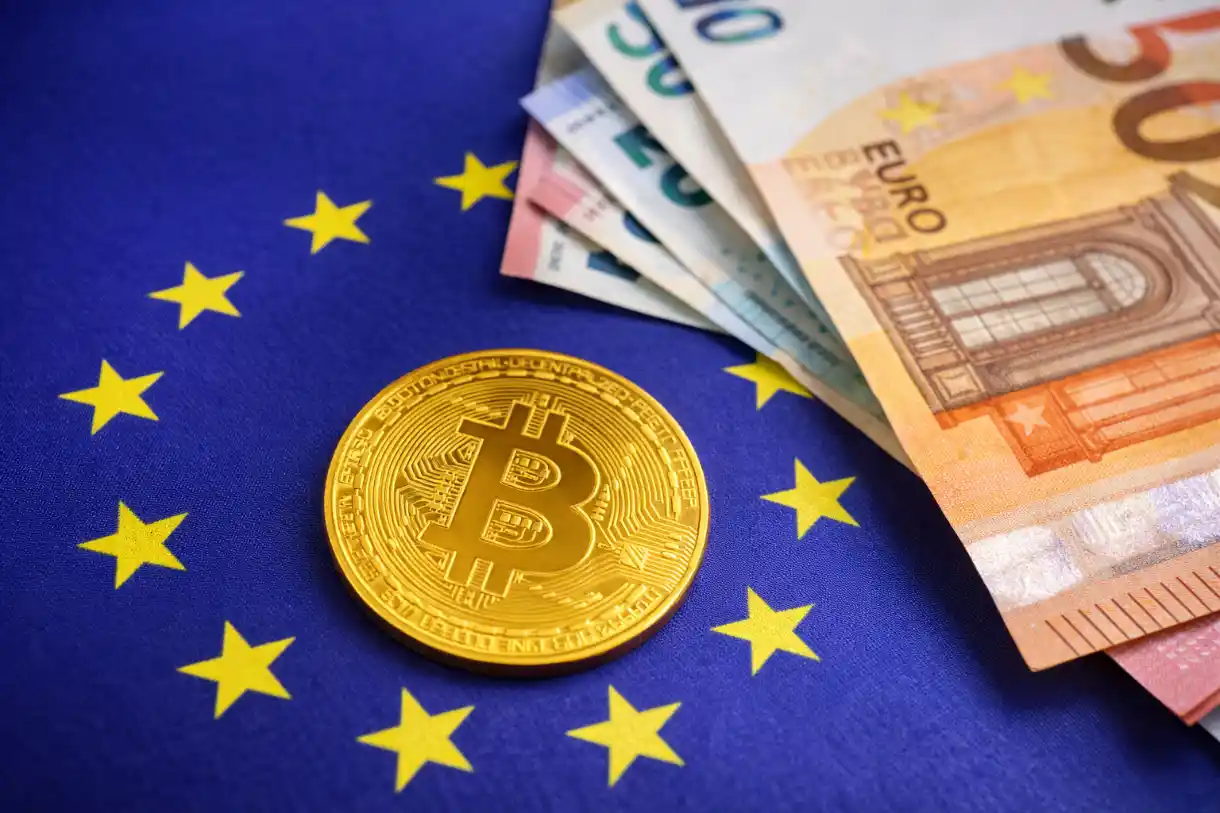
Bitcoin coin displayed on the European Union flag alongside euro banknotes.
BBVA’s Latest Crypto Step Signals a Major Shift in Europe’s Finance
In Brief
- • Spain's second largest bank BBVA just joined a coordinated push into regulated stablecoins.
- • The initiative targets euro-based payments under MiCA, not speculative crypto.
- • Europe is positioning itself for a structural shift away from dollar reliance.
Ad
Spain’s second-largest bank, BBVA, has officially joined a banking-led initiative aimed at launching a regulated euro-pegged stablecoin. Marking a significant milestone in Europe’s effort to compete with U.S. dollar-dominated digital assets.
The official move expands the Amsterdam-based Qivalis consortium to 12 major European banks seeking to build shared blockchain payment infrastructure under the EU’s MiCA framework.
Moreover, the consortium is currently working toward authorisation as an Electronic Money Institution with the Dutch central bank.
Therefore, the group expects to launch the token in the second half of 2026. Pending regulatory approval and technical readiness.
BBVA’s Involvement in Euro-Denominated Crypto Assets
BBVA’s decision to join Qivalis underscores a strategic pivot by traditional financial institutions toward interoperable digital asset infrastructure.
Furthermore, the bank is leveraging the network effect of a broader consortium to build an infrastructure that could be widely accepted across European banking channels.
Additionally, the bank confirmed its participation in the project and highlighted the collaborative nature of the effort:
“Collaboration between banks is key to create common standards that support the evolution of the future banking model and deliver financial innovation to our clients in a consistent and practical way.”
This sentiment reflects a wider trend among European banks toward standards-based development of digital currency infrastructure.
Europe Challenges Dollar Dominance in Stablecoins
The BBVA-backed initiative arrives at a moment when stablecoins tied to the U.S. dollar dominate a market valued in the hundreds of billions.
In contrast, euro-denominated stablecoins represent a tiny fraction of total market cap, despite the euro’s role as a major global currency.
Therefore, by building a regulated, bank-issued euro token, Qivalis aims to provide an EU-centric alternative for cross-border payments and tokenized assets.
The initiative underscores Europe’s broader efforts to bolster financial sovereignty. Which reduces dependence on non-EU issuers, and drive institutional adoption of digital assets.
BBVA’s entry into the consortium signals that large banks are now willing to co-sponsor major stablecoin infrastructure.
More Must-Reads:
How do you rate this article?
Subscribe to our YouTube channel for crypto market insights and educational videos.






Join our Socials
Briefly, clearly and without noise – get the most important crypto news and market insights first.

Most Read Today
1
Crypto Trading Volume Collapse: March on Track for Worst Month Since 2020
2SEC Move Opens New Phase For Bitcoin And Ethereum ETFs
3Bitcoin Crash Fears Return as Market Pressure Builds
4A Healthy Pullback Or Something More — What Drove Crypto Markets This Week
5New Threat to Prediction Markets as U.S. Crackdown Expands
Latest







8
Also read
Similar stories you might like.

Altcoins
Cardano Traders Are Capitulating — A Turning Point or Warning Sign?
Ana | 2026-03-24

Altcoins
XRP May Be Entering a Key Phase as Market Stress Signals Are Building
Ana | 2026-03-24

Market
Exclusive: AI Finance Is Now “Institutional Grade”, Says True Trading Co-Founder Igor Stadnyk
Sead | 2026-03-24

Altcoins
XRP Ownership Patterns Are Changing — And It May Signal Something Bigger
Ana | 2026-03-24

Bitcoin
Wall Street Behavior Suggests a Turning Point for Bitcoin Strategy Firms
Rokas | 2026-03-24

Altcoins
Ethereum Supply Concentration Is Rising — A Quiet Shift Is Underway
Rokas | 2026-03-24

Market
A Healthy Pullback Or Something More — What Drove Crypto Markets This Week
Sead | 2026-03-23

Bitcoin
Bitcoin Supply Shift Raises New Questions Across Market
Ana | 2026-03-23
Market
Crypto Trading Volume Collapse: March on Track for Worst Month Since 2020
Jastra | 2026-03-23

Industry
U.S. Crypto Regulation Breakthrough Pushes Clarity Act Closer to Reality
Ana | 2026-03-23