







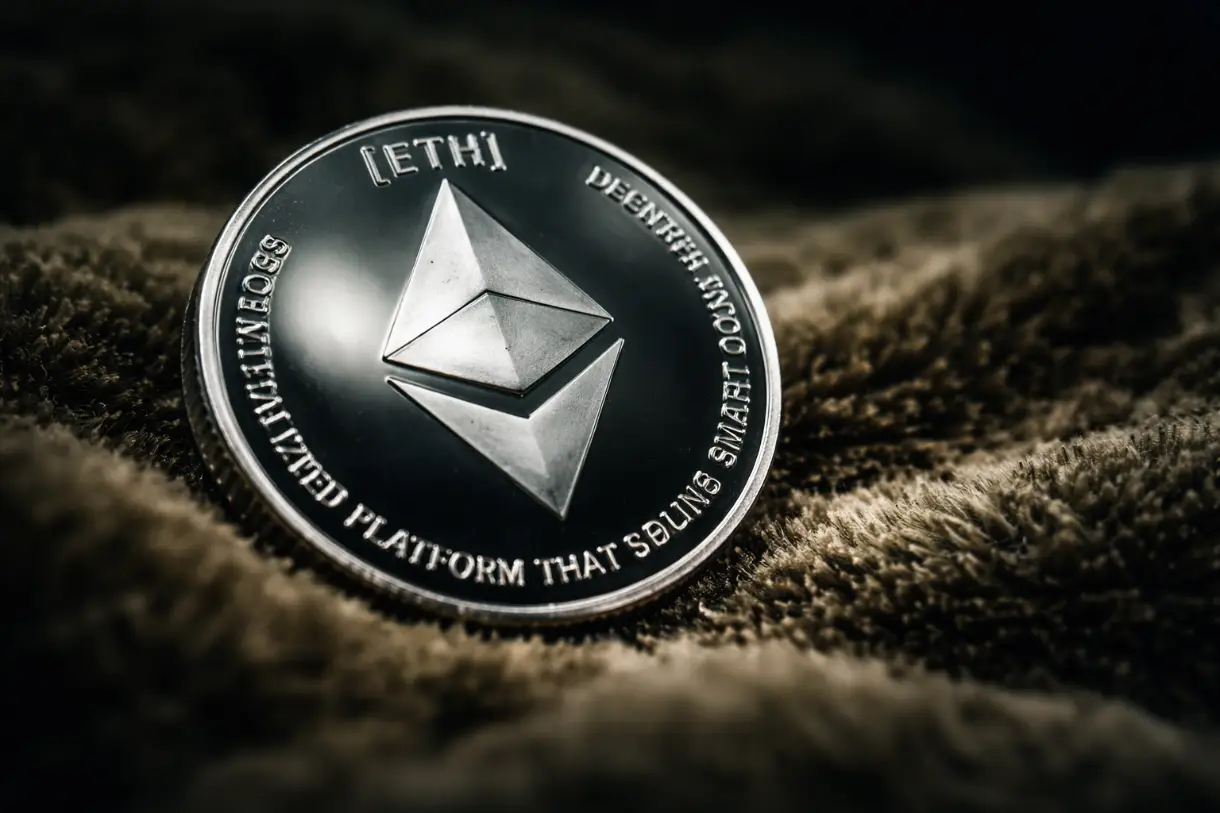
Ethereum’s roadmap leans toward zero-knowledge proofs to scale without sacrificing decentralization.
Ethereum Plans Zero-Knowledge Block Validation Upgrade in 2026
In Brief
- • Ethereum plans zero-knowledge block validation by 2026.
- • Validators would verify proofs instead of re-executing transactions.
- • The upgrade aims to boost scalability and accessibility.
Ad
Ethereum (ETH) is quietly preparing for one of its most consequential architectural changes yet, one that could redefine how blocks are validated at the protocol level.
Indeed, Ethereum is moving away from a model where every validator must re-execute every transaction, toward one where blocks can be validated by verifying zero-knowledge (ZK) proofs instead, according to an X post by Ethereum Foundation (EF) member ladislaus.eth on February 9.
Specifically, the shift is outlined in the Foundation’s L1-zkEVM roadmap for 2026, with early work tracked under EIP-8025.
From Re-Execution to Proof Verification
Today, Ethereum validators confirm block validity by independently re-executing all transactions. Though secure, this approach scales linearly with on-chain activity, increasing hardware requirements as gas limits rise.
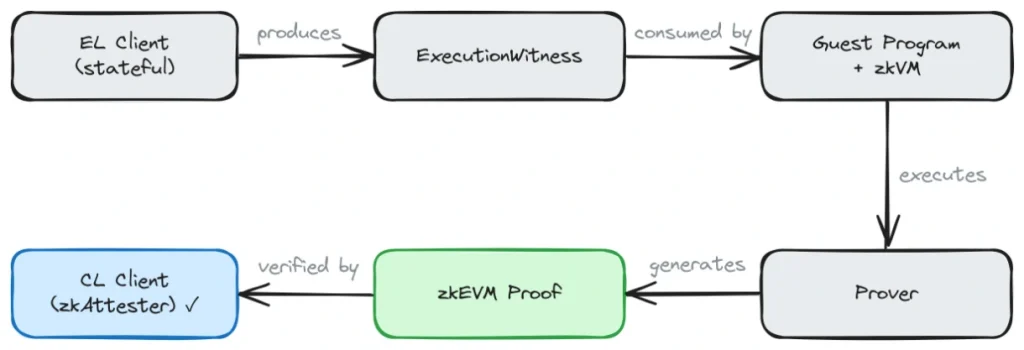
The proposed alternative is fundamentally different. Instead of repeating computation, validators would verify cryptographic proofs showing that execution was performed correctly. These proofs are compact, fast to verify, and constant-time regardless of how complex the block itself is.
Under EIP-8025, this pathway is optional. Validators can continue re-executing blocks as they do today, or they can become zkAttesters, validating execution by checking zkEVM proofs broadcast over a dedicated network channel. Early designs suggest a 3-of-5 proof threshold, preserving client diversity while reducing reliance on any single implementation.
Why This Matters For Decentralization
The most immediate impact is on validator accessibility. A zkAttested would no longer need to store the full execution state or sync the entire execution layer. Instead, syncing could be reduced to downloading recent proofs since the last finalized checkpoint.
For solo stakers and home validators, this dramatically lowers hardware costs and operation complexity. More participants can verify the blockchain on their own, thereby strengthening decentralization without trading off security.
The shift also aligns with other upcoming changes, including inbuilt proposer-builder separation (ePBS), which extends the proving window and makes instant proof generation more practical.
Where Things Stand Now
EIP-8025 has entered the consensus-specs feature branch, and active research is in progress across execution witnesses, zkEVM standardization, prover infrastructure, and formal verification.
The first L1-zkEVM workshop is scheduled for February 11, marking the official kickoff of a project that could eventually make Ethereum the largest ZK application in the world.
All things considered, if successful, this shift could define how Ethereum scales without giving up its core promise of “Don’t trust, verify!”
Elsewhere, Ethereum’s founder Vitalik Buterin has announced a period of “mild austerity” for the EF, including a planned decrease of discretionary spending to balance two goals: bringing about the clearly aggressive technical roadmap and making sure the Foundation survives in the long-term.
Ethereum Price Today
More Must-Reads:
How do you rate this article?
Subscribe to our YouTube channel for crypto market insights and educational videos.






Join our Socials
Briefly, clearly and without noise – get the most important crypto news and market insights first.





8
Also read
Similar stories you might like.

Industry
Trump Backs Bitcoin, Stablecoins In New Pro-Crypto Push
Ana | 2026-03-30
Industry
Canada Proposes Ban on Crypto Political Donations
Ana | 2026-03-30
Altcoins
Ethereum Foundation Makes Record ETH Staking Move
Ana | 2026-03-30
Bitcoin
Bitcoin Miners Turn to AI as Profits Collapse
Ana | 2026-03-30

Bitcoin
Mystery Deepens as $400M ‘Lost’ Bitcoin Suddenly Moves
Rokas | 2026-03-30

Altcoins
Kiyosaki Warns of Inflation Crisis, Lists 6 Safest Investments for 2026
Rokas | 2026-03-30
Altcoins
TRON Moves Toward Institutions: How Anchorage Support Could Influence TRX Price
Azeez | 2026-03-29
Altcoins
Gold Enters DeFi: Tether’s XAUt Expansion to BNB Chain Could Shift Market Dynamics
Azeez | 2026-03-29
Altcoins
Sui Approaches 800K Users as Token Unlock Nears — Can Price Stay Resilient?
Azeez | 2026-03-29

Altcoins
Could SpaceX’s IPO Be the Catalyst That Sends Dogecoin Above $0.10?
Azeez | 2026-03-29